
Sustainable Packaging for D2C Brands: An India Guide
· 11 min read
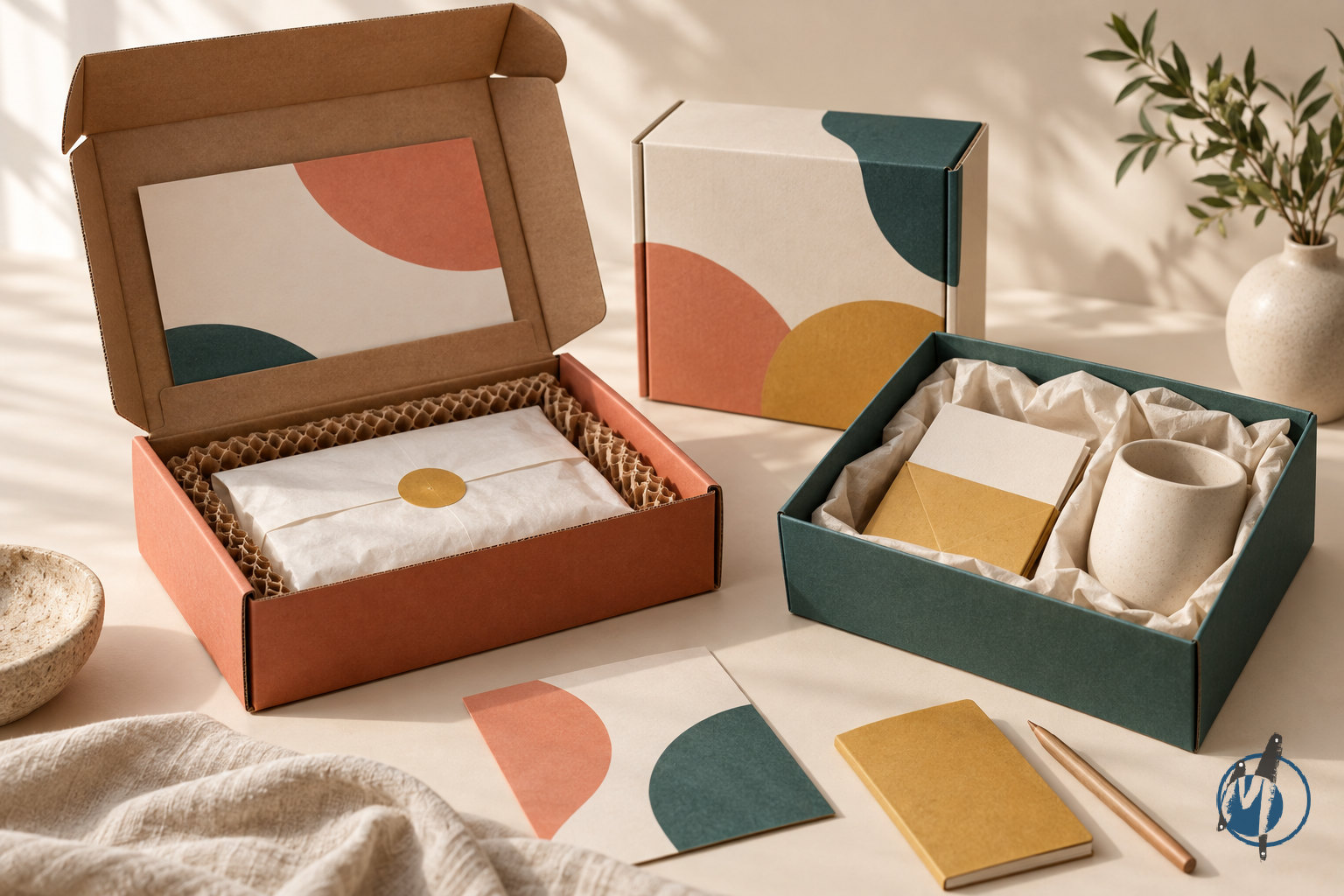
Quick answer: Sustainable packaging for D2C brands means using the least material needed to protect an order, choosing responsibly sourced materials, and designing for realistic reuse or recycling. For Indian brands, the right solution must also survive courier handling, humidity and returns without creating unnecessary waste. Start with product protection and local disposal options—not simply a switch from plastic to paper.
1. What makes D2C packaging genuinely sustainable?
Sustainability is a property of the complete packaging system, not a label attached to one material. A recycled-paper box can still be inefficient if it is oversized, heavily laminated or packed with unnecessary layers. Conversely, a lightweight protective component may prevent damage that would otherwise trigger a replacement shipment and another round of packaging.
For D2C brands, the assessment should cover primary packaging touching or containing the product, secondary packaging presenting it, and transport packaging protecting it during delivery. Each layer needs a defined job. If a decorative sleeve, tissue wrap and printed insert all communicate the same message, simplifying them may improve both material efficiency and customer experience.
The strongest approach prioritises prevention before substitution. Reduce unnecessary components, optimise dimensions, choose suitable materials, and then make disposal straightforward. Reuse is valuable when it actually happens; recyclability is valuable when collection and processing are accessible to the customer.
Evaluate the whole system
Protection: Does the pack prevent breakage, leakage, contamination and scuffing?
Material efficiency: Is every layer necessary, and is the structure appropriately specified?
Sourcing: Can suppliers substantiate recycled content or responsible fibre sourcing?
End of life: Can customers separate components and access an appropriate waste stream?
Operational fit: Can teams pack consistently without excessive tape, filler or rework?
2. Which sustainable packaging materials should D2C brands choose?
Choose materials around product needs rather than visual trends. Corrugated board is useful for transport protection, folding carton board for lightweight retail presentation, and rigid board for structured premium packaging. Recycled fibre can suit many applications, but the required strength, surface quality and intended product contact must guide the specification.
Paper is not automatically suitable for every product. Oils, moisture, fragrance migration and food contact may require functional barriers or a separate compliant primary container. Removing a necessary barrier can shorten shelf life or cause leakage, undermining the purpose of the packaging. Assess the product and packaging together before making a substitution.
The following comparison is a starting point, not a universal environmental ranking. Actual performance depends on construction, coatings, weight, sourcing and the recycling routes available where the pack is discarded.
Material or format | Useful applications | Potential sustainability advantage | What to check |
|---|---|---|---|
Recycled corrugated board | Courier mailers, outer shippers, protective partitions | Can incorporate recovered fibre and replace unnecessary outer layers | Strength, humidity performance, coatings and local collection |
Folding carton board | Beauty cartons, stationery packs, lightweight gift packaging | Material-efficient structures that can often ship flat | Product protection, fibre source and finishing compatibility |
Paper-wrapped rigid board | Premium gift boxes and hamper packaging | Durable construction with potential for continued use | Material weight, bonded layers, magnets and mixed-material inserts |
Moulded fibre | Product cradles and protective inserts | Can replace some shaped plastic cushioning | Fit, abrasion, tooling requirements and local recyclability |
Paper cushioning | Void fill, wrapping and separation | Fibre-based alternative for suitable protection tasks | Amount required and actual shock protection |
Flexible plastic packaging | Moisture-sensitive products and lightweight shipping applications | Low material weight and useful barrier performance | Polymer structure, collection access and applicable compliance |
Certified compostable material | Specific applications with a credible composting route | May support suitable managed organic-waste systems | Certification scope, disposal conditions and collection availability |
3. How do you choose between folding boxes, rigid boxes and mailers?
Begin with the journey the package must survive. A folding carton that looks excellent on a shelf may need a separate courier shipper. A well-designed corrugated mailer may combine presentation and shipping functions, eliminating a layer. Neither format is universally better: the correct choice depends on product fragility, weight, value and presentation requirements.
Folding boxes are useful when space efficiency, flat storage and clean printed presentation matter. Rigid boxes provide structure and a substantial opening experience, making them relevant to gifting and curated hampers. Their additional material should serve a clear purpose, rather than functioning as the default route to a premium appearance.
For multi-item orders, inserts and partitions deserve as much attention as the outer box. They should stop movement, separate incompatible items and support predictable packing. A compact insert that locks products in place can be more effective than a large box filled with loosely arranged paper.
Match the format to the task
Lightweight, non-fragile products: Consider a fitted folding carton or paper-based shipping format after transit testing.
Fragile products: Prioritise engineered cushioning, partitions and a suitable outer shipper.
Gift and hamper orders: Design around the heaviest item and prevent components from colliding.
Premium collections: Use rigid packaging selectively and give customers a credible reason to retain it.
Variable baskets: Develop a small family of shipping sizes instead of forcing every order into one oversized box.

4. Can premium packaging use foil, embossing and spot UV responsibly?
Premium packaging does not require every available finish. Structure, proportion, colour, typography and tactile material choices can create a distinctive experience with fewer components. Embossing or debossing may provide visual interest without adding a separate film, although board suitability, tooling and production waste still need consideration.
Foil and spot UV require a more specific conversation. Their implications depend on the chemistry, coverage, substrate and recycling process—not simply the presence of a decorative effect. Do not assume that a tiny foil accent makes a whole box unrecyclable, or that every coated paper pack is readily recyclable. Ask the converter for evidence relevant to the finished construction.
For gift packaging, distinguish functional durability from decorative excess. A protective treatment might prevent scuffing and avoid rejected stock, while another might only add gloss. Make these decisions deliberately, and test less complex alternatives before committing to an elaborate specification.
A practical finishing hierarchy
First, establish the desired look through layout, colour and structural design.
Explore uncoated or lightly treated stocks where product use allows.
Use embossing, foil or spot UV selectively, with a defined visual purpose.
Question full-surface lamination when it serves no necessary protective function.
Avoid permanently bonded decorative elements that make separation difficult.
5. How can brands reduce packaging without increasing transit damage?
Right-sizing is not the same as making the box as small as physically possible. Products may need clearance, cushioning and structural support to survive impacts and compression. The goal is the smallest effective protective system, validated against the actual delivery environment rather than judged from a desktop mock-up.
Indian delivery routes can expose packaging to humidity, stacking loads, repeated handling and mixed transport conditions. Evaluate the assembled pack with the intended product, closure, insert and shipping label. A beautiful sample tested empty tells you little about how a filled order will behave in transit.
Testing should reflect the risk. Fragile glass, heavy hampers and leak-prone products need different checks from notebooks or textile accessories. Use an appropriate recognised test protocol or a qualified testing partner where warranted, and supplement controlled testing with a monitored pilot across representative delivery routes.
What to test before reducing material
Impact resistance: Does the product remain protected after relevant drops and knocks?
Compression: Can the pack withstand expected stacking and handling loads?
Movement: Do products shift, collide or escape their inserts?
Climate exposure: Do board, adhesives and closures remain functional under expected conditions?
Surface damage: Are products and presentation surfaces protected from abrasion?
Returns: Can the customer repack the product safely if a return is necessary?
6. What sourcing evidence and compliance checks matter in India?
Sustainable sourcing starts with precise supplier questions. Ask what percentage of recycled content is claimed, whether it refers to a component or the entire pack, and how that claim is supported. For certified fibre sourcing, check the relevant chain-of-custody documentation and whether the specific supplied product and proposed on-pack claim are covered.
Regulatory obligations depend on the product category, packaging composition and the business's role. Brands introducing plastic packaging into the Indian market should assess obligations under the Plastic Waste Management Rules and applicable extended producer responsibility requirements. Check current official guidance, including CPCB requirements where relevant, rather than assuming a supplier's compliance automatically covers the brand.
Food-contact packaging needs additional scrutiny. Recycled content alone does not establish food-contact suitability, and inks, adhesives and barriers may affect compliance. Confirm applicable FSSAI packaging requirements and obtain relevant documentation or testing for the intended use. Separately review mandatory product and packaged-commodity declarations so environmental messaging does not displace required information.
Documents and details to request
A component-level material specification, including coatings, adhesives and inserts.
Evidence supporting recycled-content or certified-sourcing claims.
Applicable product-contact declarations and relevant test reports.
Clear details of any compostability certification and its permitted claims.
Confirmation of who is responsible for applicable registrations, reporting and compliance tasks.
Written approval requirements for material or process substitutions.

7. How should a D2C brand develop sustainable packaging step by step?
Treat packaging development as a coordinated design, procurement and operations project. A brief focused only on aesthetics will miss transit requirements; a brief focused only on unit cost may overlook packing labour, storage and damage. Bring these considerations together before selecting the final format.
The process below works for both a first launch and an existing packaging redesign. It creates clear decision points, allowing the team to reject unsuitable options before investing in a full production run.
Audit the current pack. List every component, its material, dimensions, weight and function. Record complaints, packing difficulties and recurring damage patterns.
Define the product requirements. Document product dimensions, fragility, weight, barrier needs, presentation expectations and return requirements.
Map the order mix. Identify common baskets, multi-product combinations and gift configurations. Use these to develop a manageable family of sizes.
Write measurable design goals. Examples include eliminating an unnecessary sleeve, reducing empty volume or replacing a difficult-to-separate insert without reducing protection.
Compare structural concepts. Explore folding boxes, rigid boxes, mailers and inserts against the same functional brief rather than comparing appearance alone.
Sample with actual products. Check fit, opening experience, assembly time, closure and customer handling. Include the shipping configuration, not just the presentation box.
Validate protection and claims. Complete appropriate testing, review sourcing evidence and verify the wording of environmental statements.
Run a controlled pilot. Track damage, packing exceptions, customer feedback and material use across representative orders before wider rollout.
Lock the specification. Approve materials, dimensions, finishes, tolerances and quality checks. Establish a change-control process for future substitutions.
After launch, revisit the design when the product, supplier or delivery profile changes. A pack validated for one bottle or hamper assortment should not automatically be treated as suitable for a heavier or differently shaped replacement.
8. How do you evaluate cost and measure improvement?
Compare total delivered cost rather than box price alone. The packaging budget includes components, printing, tooling, freight, storage, packing labour and the consequences of damage. Dimensional-weight rules can also make oversized parcels expensive, although the calculation varies by logistics provider and service.
A more efficient structure may reduce filler and assembly effort while using a better-specified board. Conversely, a cheap component may create extra taping, inconsistent packing or avoidable replacements. Request comparable quotations against a shared specification, and separate one-time development costs from recurring production costs.
Measure environmental progress with the same discipline. Reduced packaging weight is a useful indicator, but it is not a complete carbon assessment. Claims about lower emissions require a defensible methodology and appropriate boundaries; do not infer them solely from a switch in material or colour.
Useful operating metrics
Packaging weight per representative order, broken down by material.
Number of components and steps required to pack an order.
Empty space and use of filler across common basket configurations.
Damage and replacement rates, with causes recorded where possible.
Share of packaging supported by verified sourcing documentation.
Customer understanding of separation and disposal instructions.
9. What mistakes and misleading sustainability claims should brands avoid?
The most common mistake is substituting appearance for evidence. Brown paper, leaf graphics and the word “natural” do not establish lower environmental impact. Likewise, “biodegradable” without conditions or a meaningful timeframe tells customers little about what to do with the pack after delivery.
Another mistake is treating technical recyclability as a guarantee of recycling. A component may be processable in a specialist facility but lack a practical collection route for most customers. Give specific, locally qualified instructions rather than promising that every pack will be recycled.
Reuse claims also deserve restraint. A rigid gift box may be useful for storage, but “reusable” should describe a practical feature, not merely a hope. Ensure the structure is durable and convenient, and do not use hypothetical future reuse to excuse unnecessary material at purchase.
Common mistakes to avoid
Replacing a functional barrier without validating shelf life or leakage protection.
Adding several decorative layers while promoting a minimal-packaging message.
Calling a mixed-material pack “plastic-free” without checking coatings, windows, tape and inserts.
Claiming compostability without explaining home versus industrial conditions and access limitations.
Ordering large quantities before testing the structure and print specification.
Making unqualified “eco-friendly,” “zero-impact” or “fully sustainable” claims.
Pre-launch packaging checklist
Every component has a necessary, documented function.
The final packed product has passed appropriate protection checks.
Material specifications and sourcing claims have supporting evidence.
Finishes and mixed materials have been reviewed for disposal implications.
Instructions explain separation and qualify local recycling availability.
Mandatory product information and applicable compliance requirements have been checked.
Packing teams can assemble and close the format consistently.
A pilot and post-launch review are planned.

10. How can Messketeers help?
Messketeers' Custom Print & Packaging Studio — Packaging Solutions brings brand identity and packaging decisions into the same conversation. Its services include rigid and folding boxes, gift and hamper packaging, foil, embossing and spot UV, and sustainable materials. That combination allows presentation to be considered alongside structure, material choices and the practical demands of a D2C order.
For a useful project brief, share the actual product dimensions and weights, common order combinations, existing packaging, delivery concerns and desired brand experience. Include any product-contact requirements, sourcing expectations and environmental claims you hope to make. This helps frame the design discussion around concrete needs instead of a vague request for an “eco-friendly box.”
The objective should be a coherent packaging system: the right format for the product, intentional finishes, fewer unnecessary components and clear instructions for customers. Whether the brief calls for a compact folding box or a carefully structured gift hamper, sustainability works best when it is built into the specification—not added as a graphic at the end.
Planning a packaging launch or redesign? Start a conversation with Messketeers' Custom Print & Packaging Studio about your products, fulfilment journey and sustainability priorities, so the packaging brief can balance protection, identity and responsible material use.
Frequently asked questions
What is the most sustainable packaging for a D2C brand?
There is no universally best material. The strongest option uses minimal necessary material, protects the product and fits realistic local collection or reuse routes. A fitted corrugated mailer may work for one brand, while another needs a barrier container and protective outer box. Compare complete packaging systems rather than individual materials.
Is paper packaging always better than plastic?
No. Paper can be useful where fibre recovery is accessible, but it may require more material or additional barriers for certain products. Plastic can provide lightweight protection and moisture resistance, although collection and recycling may be difficult. Consider product preservation, packaging weight, sourcing and end-of-life options before choosing either material.
Can luxury packaging still be sustainable?
Luxury packaging can become more resource-efficient through precise sizing, considered structures and selective finishes. Folding boxes, tactile stocks and embossing can create a premium experience without multiple decorative layers. Rigid boxes should serve a clear protective or gifting purpose, and any reuse claim should reflect a genuinely useful, durable design.
Are foil and spot UV compatible with recyclable packaging?
Compatibility depends on the substrate, finish chemistry, coverage and recycling process. Neither a blanket approval nor a blanket rejection is reliable. Ask the packaging converter for evidence about the finished construction, minimise unnecessary coverage and check relevant collection routes. Evaluate coatings, adhesives and inserts alongside the decorative finish.
What should Indian D2C brands check before claiming compostability?
Verify that the relevant material or finished product has appropriate certification, understand whether it requires industrial or home composting conditions, and check applicable Indian requirements. Instructions should explain those conditions clearly. Compostable packaging should not be presented as suitable for littering, ordinary recycling or guaranteed breakdown in landfill.
How can a brand start improving packaging without a complete redesign?
Audit the current pack for unnecessary layers, oversized boxes, excessive filler and difficult-to-separate components. Test a focused change against actual products and delivery conditions, then monitor damage and packing performance. Improving disposal instructions and obtaining better sourcing documentation are also useful steps, even when the main structure stays unchanged.