Paper Art Installation for Corporate Events: Expert Guide
· 12 min read
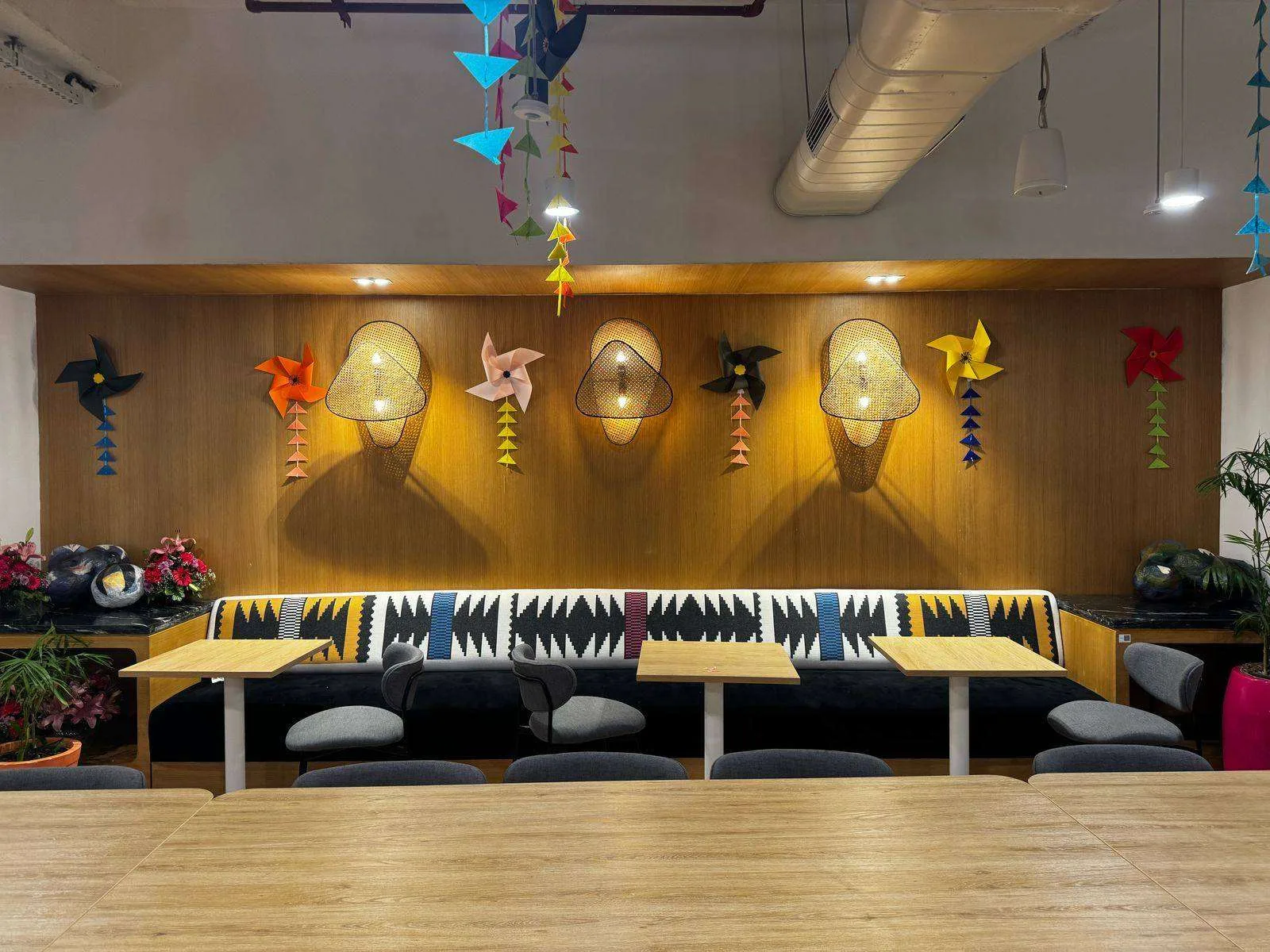
Quick answer: A paper art installation for corporate events is a custom-built arrangement of folded, cut, layered or sculpted paper that transforms a venue into a branded experience. Giant paper flowers, origami sculptures, suspended installations and gallery pieces can support launches, conferences, celebrations and employee events. The strongest results combine a clear creative concept with practical planning for visibility, structural support, venue permissions, installation and reuse.
1. What makes paper art effective for corporate events?
Paper offers an unusual combination of visual softness and sculptural precision. It can become a bold architectural gesture, an intricate object that rewards close viewing, or a repeated pattern that draws people through a space. For corporate events, that flexibility makes it useful when the environment needs to express a brand without relying entirely on printed backdrops and screens.
A well-designed installation also works at different viewing distances. From the entrance, guests might see a dramatic flower landscape or a cloud of folded forms. As they approach, individual folds, layered edges and subtle colour changes reveal the craftsmanship. This progression gives the experience depth and provides several compositions for event photography rather than a single flat photo wall.
The material alone, however, does not create meaning. An installation should have a defined job: introduce a product, establish a mood, frame a speaker, welcome employees or create a memorable pause between programme segments. Its form, placement and lighting should follow that purpose.
Start with the experience you want
Arrival impact: Establish the event's visual language before guests enter the main hall.
Brand storytelling: Translate ideas such as growth, connection or transformation into physical forms.
Photography: Create a backdrop with depth, flattering light and room for groups.
Spatial definition: Distinguish a reception, lounge or display area without visually heavy partitions.
Close-up engagement: Present crafted objects that invite observation without requiring interaction.
2. Which type of paper installation suits your event?
The best format depends on the venue, audience behaviour and role of the installation. Giant paper flowers bring expressive scale and an organic character. Origami sculptures offer geometry, repetition and precision. Suspended installations make use of overhead volume, while gallery pieces create focused viewing moments on plinths, walls or freestanding supports.
Choose the format after mapping how people will encounter it. A conference foyer needs clear circulation and strong first impressions; a product reveal may need controlled sightlines and a single focal point. A seated dinner introduces different concerns, including views across tables, service routes and the relationship between overhead decoration and existing lighting.
Format | Particularly useful for | Visual character | Main planning consideration |
|---|---|---|---|
Giant paper flowers | Entrances, celebration backdrops, hospitality spaces | Organic, expressive and dimensional | Stable bases, petal clearance and protection from contact |
Origami sculptures | Product launches, innovation themes, conference displays | Geometric, rhythmic and precise | Fold consistency, assembly accuracy and suitable paper stiffness |
Suspended installations | Atriums, foyers and spaces with usable overhead volume | Immersive, floating and architectural | Approved attachment points, overhead safety and installation access |
Gallery pieces | Executive receptions, curated lounges and premium displays | Focused, detailed and contemplative | Viewing distance, plinth stability and protective placement |
Combine formats selectively
A mixed installation can work well when one form leads and the others support it. For example, an origami focal sculpture might be echoed by a smaller suspended arrangement elsewhere. Avoid treating every area as a separate spectacle: a consistent shape language, palette and material finish helps the event feel cohesive.
3. How do you turn a brand brief into a paper art concept?
Begin with the message, not a reference photograph. Ask what guests should understand or feel after seeing the installation, and identify the specific brand attributes that matter for this event. A concept about collaboration might use separate units joining into a larger form; a concept about growth might use a progression of opening structures rather than literal floral decoration throughout.
Translate those ideas into a restrained visual vocabulary. Brand colours can appear through accents, gradients or contrasting edges instead of covering every surface. Product geometry, packaging details and graphic patterns can inform folds or silhouettes, provided the installation remains visually legible at the scale of the room.
Photography should be part of this concept stage. A structure that looks compelling in elevation may appear cluttered behind a group of guests or disappear under coloured stage lights. Plan principal camera positions, areas for people to stand, and the relationship between the installation and any separate event signage.
A useful creative brief includes
The event objective and the installation's specific role.
Audience profile and expected patterns of movement.
Venue photographs, measured drawings and available installation zones.
Brand guidelines, approved colours and relevant product references.
Desired atmosphere, such as celebratory, calm, playful or precise.
Photography, video and accessibility requirements.
Any expectation of touring, storage, adaptation or reuse.
Concept approval should confirm more than appearance. Agree on the intended viewing angles, approximate footprint, proposed support approach and details that still need testing. This prevents a visually approved sketch from being mistaken for a fully resolved construction plan.

4. What materials and construction details matter most?
Paper selection affects both the appearance and the reliability of the installation. Lightweight sheets can produce delicate movement and translucent effects, while heavier papers and boards offer greater body. Weight alone is not enough to specify a material: grain direction, stiffness, fold behaviour, surface finish and how it responds to adhesives all influence the result.
The finished artwork may also require non-paper components. Frames, backing panels, base plates, connectors and suspension hardware can provide the stability that paper surfaces cannot. These elements should be documented and visually integrated rather than assumed away because the installation is described as paper art. Adhesives and finishes need compatibility testing to avoid staining, distortion or visible attachment marks.
Prototype the details that carry risk
Folds: Check cracking, spring-back and consistency across repeated units.
Curves and petals: Test whether the intended shape holds over time.
Connections: Verify that joining methods suit the actual materials and handling conditions.
Colour: Review physical samples under representative venue lighting.
Packing: Confirm that components can travel without irreversible creasing or crushing.
Assembly: Check that installers can access connections without damaging finished surfaces.
For events in India, environmental exposure deserves particular attention. Humidity, monsoon conditions during transport, strong air-conditioning outlets and direct sunlight can all affect the installation. An air-conditioned interior may offer more control than a semi-open venue, but materials still need to be assessed against the actual site and event conditions.
5. How should safety and venue approvals be handled?
Safety should shape the concept from the beginning, particularly for suspended work and large freestanding sculptures. Paper is combustible unless a specific material or treatment has documented performance relevant to the application. Do not assume that a coating makes an installation compliant; confirm the venue's requirements and whether the proposed material documentation or testing is acceptable to the relevant approving parties.
Suspended installations require an approved support strategy, confirmed attachment points and competent rigging personnel. The assessment must account for the whole assembly, including frames, connectors and hardware, not just the paper elements. Ceiling grids, pipes and decorative fittings must never be treated as usable suspension points without explicit approval.
Freestanding work requires its own review. Concealed bases must resist foreseeable movement and accidental contact, while exposed edges and protrusions should not create hazards. Installations must preserve exits, accessible routes, firefighting equipment access, sprinkler performance and necessary sightlines. Any required clearances should come from the venue and applicable requirements, not generic design assumptions.
Safety and venue approval checklist
Confirm the footprint and circulation plan with the venue.
Identify who approves structural supports and overhead work.
Obtain permission for every attachment method and fixing location.
Confirm material, fire-safety and documentation requirements.
Review interaction with lights, electrical equipment and HVAC airflow.
Plan suitable access equipment and a controlled installation area.
Check base stability and guest-contact risks.
Agree on inspection, maintenance and safe dismantling responsibilities.
6. What does the design-to-installation process look like?
A reliable process separates creative decisions from fabrication release. The concept should establish the story and visual direction; subsequent development resolves materials, supports, dimensions and assembly. Starting full production before these details are settled increases the risk of rework, especially when many repeated components depend on one unresolved fold or connection.
The production schedule should be built backwards from venue handover, not merely from the event's start time. Access restrictions, loading procedures, other vendors' work, approvals and packing all influence the programme. Ask for a project-specific schedule rather than assuming that a simple-looking installation is quick to manufacture.
A step-by-step workflow
Discovery and site review: Establish the objective, audience, venue conditions, budget parameters and available access.
Concept development: Present the proposed form, palette, location and relationship to the event experience.
Technical development: Resolve dimensions, materials, support methods, assembly logic and approval needs.
Sampling and prototyping: Test representative folds, finishes, connections and packing methods; revise weak details.
Design sign-off: Confirm the agreed scope, physical samples, responsibilities and outstanding venue conditions before fabrication.
Fabrication and quality checks: Produce components, check consistency and label modules in assembly order.
Packing and transport: Protect vulnerable surfaces and organise the load around the installation sequence.
On-site assembly and inspection: Install within the approved area, verify supports and review the finished work under event lighting.
Handover and monitoring: Explain care restrictions and identify who will handle accidental damage or adjustments.
Dismantling and aftercare: Remove safely, separate reusable components and follow the agreed storage or disposal plan.
A clear responsibility matrix helps throughout. The studio, event agency, venue team, rigging contractor and lighting supplier should know which decisions they own. One nominated client-side approver can also prevent conflicting feedback from reaching fabrication teams at different stages.
7. What affects the cost of a corporate paper installation?
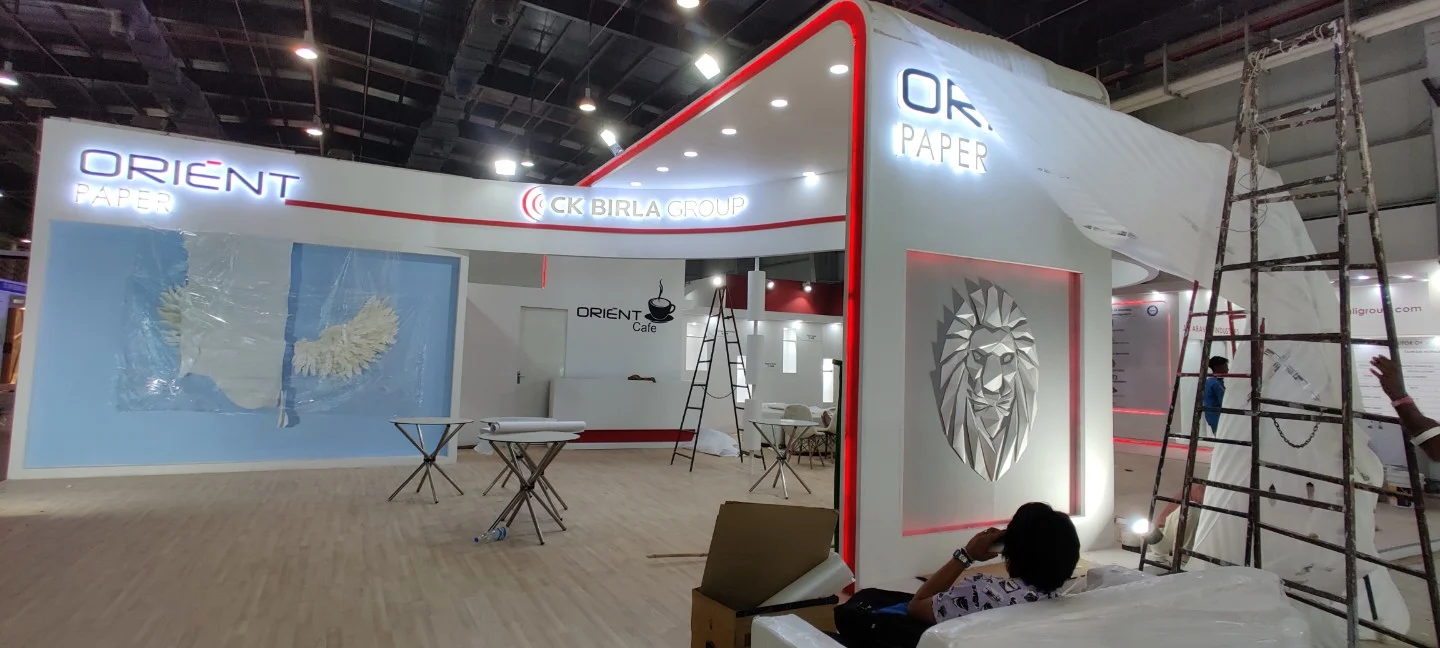
The cost of a paper art installation for corporate events comes from much more than the paper itself. Design development, hand fabrication, structural supports, specialist installation, packing and logistics can all be significant. A visually minimal sculpture may require extensive prototyping, while a larger modular arrangement may use an efficient repeated unit.
Compare proposals by scope rather than by the headline amount. Check whether each includes site assessment, samples, support structures, installation labour, access equipment, transport, dismantling and applicable taxes. Also establish how venue charges, storage, repairs and changes after approval will be handled. A low initial quotation can be misleading if essential delivery items sit outside it.
Major cost drivers
Complexity: Unique forms and intricate assembly demand more development and fabrication effort.
Scale and density: Both the footprint and the number of components affect production.
Material specification: Special finishes, colour matching and performance requirements can change sourcing needs.
Support systems: Overhead rigging and engineered freestanding supports add work beyond surface decoration.
Venue access: Restricted load-in, difficult access and overnight working affect installation planning.
Logistics: Fragile volume, protective packing and intercity transport influence delivery costs.
Lifecycle: Reusable construction and storage-ready packing require deliberate upfront design.
To control costs without flattening the idea, prioritise one strong focal point and simplify secondary areas. Repeated modules, fewer material variations and early approvals can reduce avoidable complexity. Protect safety, structural suitability and essential testing; reduce decorative density before cutting those provisions.
8. Can paper installations be reused or made more sustainable?
Paper should not automatically be described as sustainable simply because it is familiar or potentially recyclable. The environmental implications depend on sourcing, material quantity, coatings, adhesives, structural components, transport and what happens after the event. A mixed-material sculpture may be difficult to recycle even when its visible surface is mostly paper.
Begin with reduction and reuse. A modular installation can be designed to change layout, fit another venue or become a smaller display after the event. Removable event-specific elements are often easier to update than permanent branding integrated into every module. Reuse works best when there is an identified owner, destination and storage plan before production starts.
Questions to ask before calling a design sustainable
Can the desired impact be achieved with fewer components?
Is there documentation for any claimed recycled or responsibly sourced content?
Can paper surfaces be separated from frames and fixings?
Are coatings or laminations necessary for the intended application?
Will a local recycler accept the actual finished materials?
Can damaged modules be replaced individually?
Who will fund, manage and use the installation after the event?
Storage is part of this decision, not an afterthought. Reusable pieces need dry, protected conditions, suitable packing and handling instructions. If those conditions are unavailable, a simpler installation with a credible material-separation plan may be more practical than a fragile structure described as reusable without a realistic next use.
9. What common mistakes should event teams avoid?
The most common design mistake is choosing a reference image before understanding the venue. A suspended cloud photographed in a tall atrium may not translate to a low-ceilinged conference room. Likewise, an intricate sculpture can lose its impact in a visually busy foyer unless scale, contrast and placement are adjusted for the setting.
Another mistake is planning only for the finished photograph. Guests need room to approach, pause, pose and move away without blocking circulation. Installation teams need access to bases and fixings, and venue staff need to operate around the artwork. Test the proposed layout against actual movement rather than relying only on a clean visualisation.
Mistakes to catch before production
Approving colour only on screen: Request physical samples and review them under suitable lighting.
Ignoring the loading route: Check doors, lifts, stairs and turning space for the packed components.
Treating overhead work as lightweight decoration: Obtain the necessary support and rigging approvals.
Leaving lighting until the end: Test shadow, glare and the effect of coloured event lights on paper surfaces.
Overcrowding a photo area: Leave room for people and camera positions, not just the sculpture.
Making late dimensional changes: Recheck supports, packing and assembly when size or layout changes.
Skipping dismantling plans: Allocate access, labour and packing for safe removal.
Overpromising environmental benefits: Make only claims supported by the specified materials and actual recovery plan.
Before final handover, walk the space from a guest's perspective and from operational routes. Check the installation at seated and standing viewpoints, review photographs from intended camera positions, and confirm that no element has shifted during assembly. Small corrections at this stage can improve both presentation and usability.
10. How Messketeers can help with your corporate event?
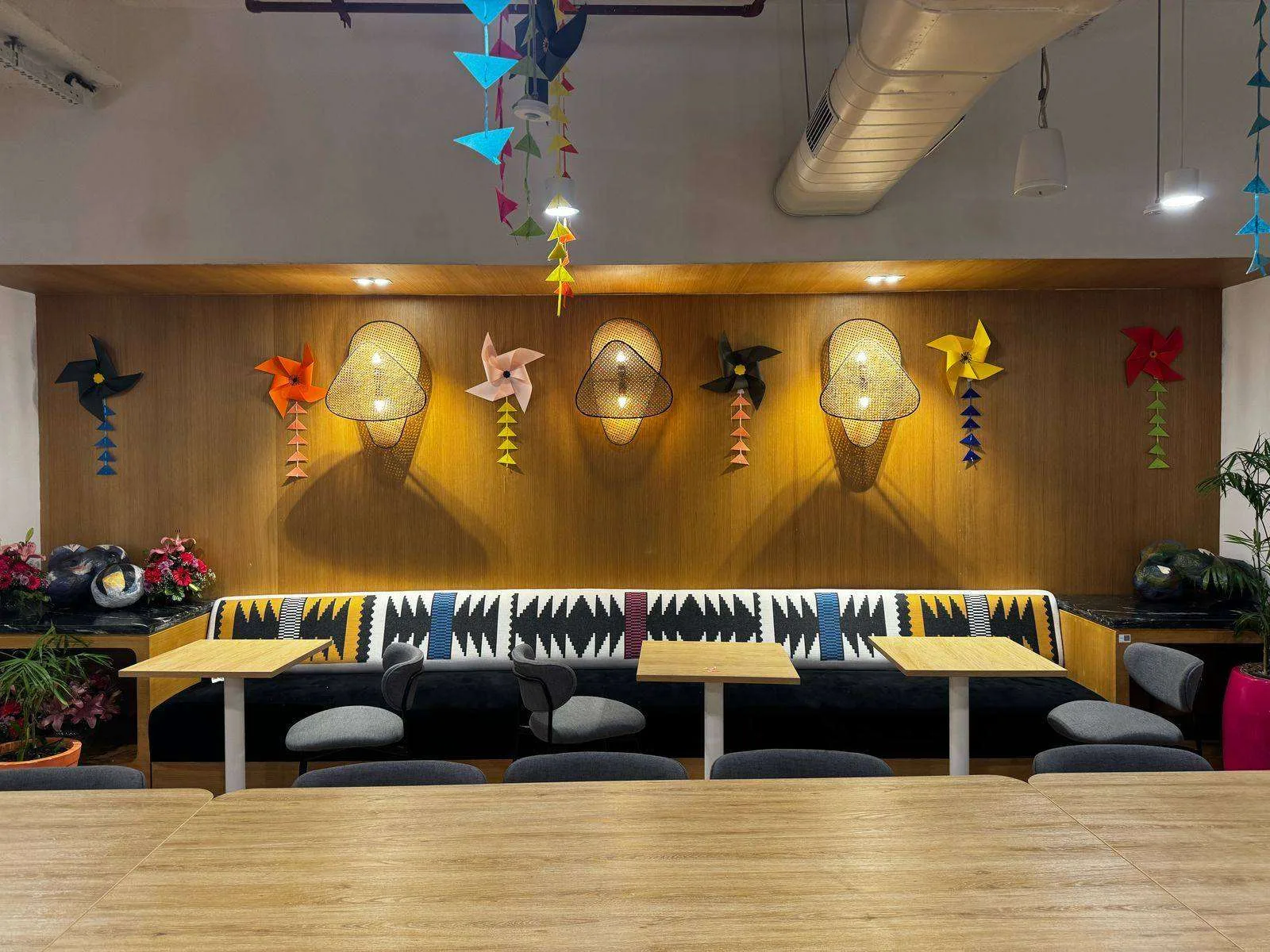
Messketeers is an India-based creative studio working across brand identity, custom print and packaging, OEM stationery manufacturing, and experiential decor and paper art installations. Within its Sculptural & Origami Art Installations offering, the studio creates giant paper flowers, origami sculptures, suspended installations and gallery pieces. These formats provide different starting points for translating an event brief into a physical experience.
The wider creative context is useful when the installation needs to belong to a coordinated brand environment. Rather than treating paper art as an isolated decoration, discuss how its colours, shapes and material character could relate to invitations, packaging, stationery or other event touchpoints. The aim is coherence, not repeating the same graphic on every surface.
What to share when starting a conversation
Your event objective, date and location.
Venue photographs, drawings and any known restrictions.
The proposed installation area and its intended purpose.
Brand references and preferred paper art formats.
Budget parameters and the scope you want considered.
Installation access, approval requirements and reuse expectations.
Bring these details to Messketeers to discuss a suitable creative direction and project scope. Ask how the proposed concept will address materials, supports, venue coordination, transport and dismantling, and confirm the responsibilities included in the proposal. A successful commission should feel distinctive on the event day while remaining practical to approve, build, install and care for.
Frequently asked questions
What is a paper art installation for corporate events?
It is a custom spatial artwork made from folded, cut, layered or sculpted paper, often supported by frames or other structural components. Corporate applications include entrance features, product-launch displays, photographic backdrops and overhead installations. The design should connect to the event objective while accommodating guest movement, venue conditions and safety requirements.
Can paper installations be used outdoors?
Outdoor use requires careful assessment because rain, humidity, wind and sunlight can damage paper or affect stability. A sheltered location does not eliminate those risks. Discuss exposure, material testing, support requirements and a weather contingency with the studio and venue. An indoor installation may be the more appropriate choice when conditions cannot be controlled.
How far in advance should we commission an installation?
Start once the event objective and venue are reasonably clear. The required lead time depends on design complexity, sampling, material sourcing, approvals and installation access. Ask for a project-specific programme that includes prototyping, fabrication, transport and dismantling. Early engagement is especially important for suspended work or concepts requiring approval from several venue stakeholders.
Are suspended paper installations safe above guests?
They can be appropriate when designed and installed using approved supports, suitable hardware and competent rigging personnel. Paper's low weight does not remove overhead risks, and the complete assembly must be considered. Venue approval, applicable fire-safety requirements, required clearances and an inspection plan should be resolved before the installation is opened to guests.
Can a corporate paper installation be reused?
Yes, when reuse is designed into the structure and handling plan. Modular components, replaceable surfaces and removable event-specific details can make adaptation easier. However, reuse also requires suitable packing, dry storage and someone responsible for future deployment. Confirm the next intended use early rather than assuming the finished artwork will be easy to store.
What should we send Messketeers for an initial brief?
Share the event objective, date, city, venue photographs or drawings, preferred installation area and budget parameters. Include brand references, the installation's intended role and any restrictions on rigging or materials. Mention whether you are considering giant paper flowers, origami sculptures, suspended installations or gallery pieces, along with any transport or reuse requirements.