Origami Installation for Brand Launch: Expert Guide
· 12 min read
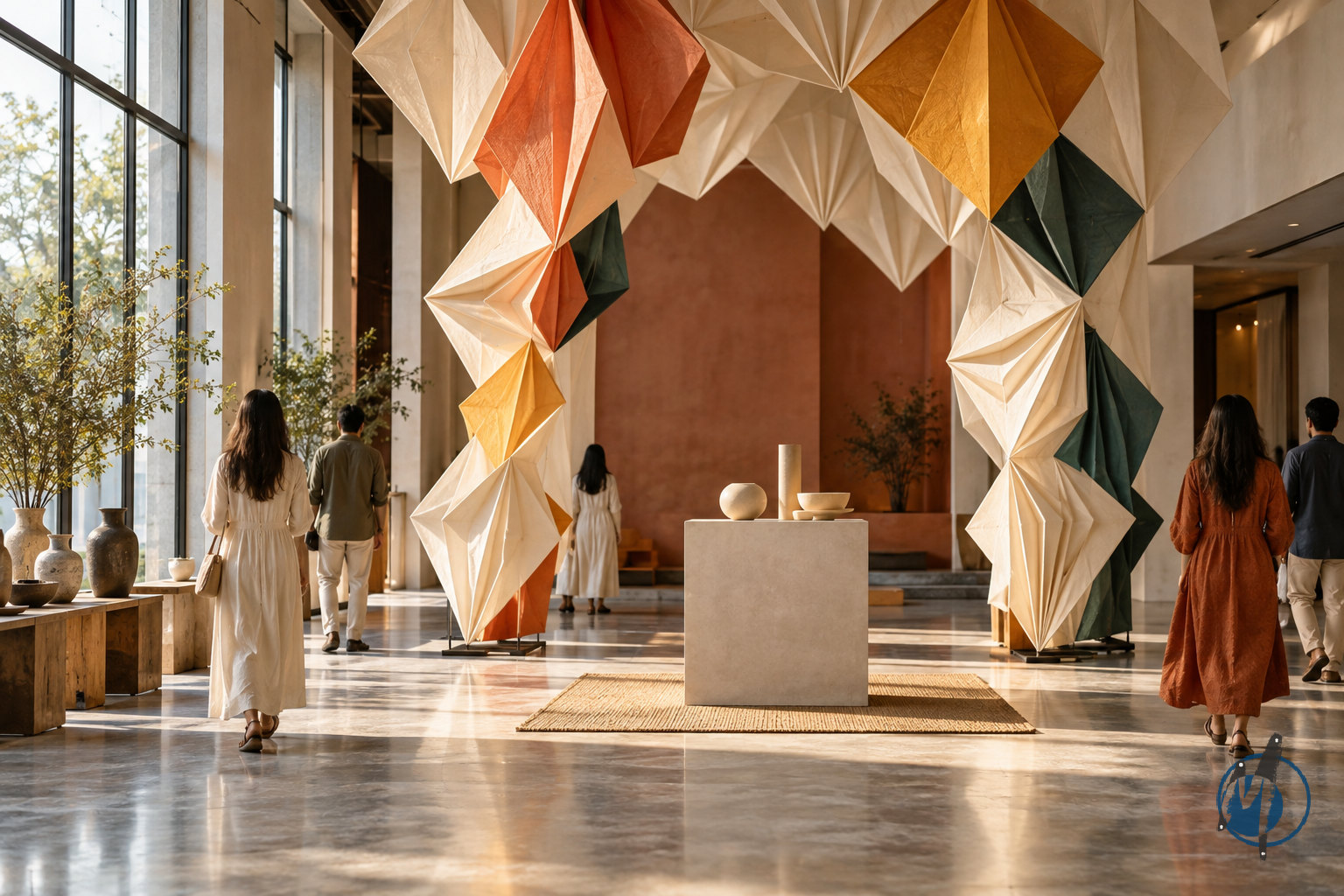
Quick answer: An origami installation for a brand launch is a custom spatial artwork that translates a brand idea into folded forms, from a sculptural product backdrop to an overhead paper canopy. A successful installation balances visual storytelling with venue permissions, structural safety, lighting, guest movement and a practical installation plan. For India-based launches, material choice and execution should also account for humidity, transport, access and local venue requirements.
What makes an origami installation effective for a brand launch?
An installation should do more than fill an empty corner. It should give guests an immediate visual understanding of the launch: what is new, what the brand stands for and where attention should go. Folded geometry can communicate precision, movement, transformation or delicacy, but those meanings need to connect to the actual product story. A striking sculpture without that connection can become a memorable artwork attached to a forgettable launch.
Start by assigning the installation one primary job. It might frame a product reveal, establish the arrival experience, create a photography destination or guide people towards a demonstration area. Secondary uses are welcome, but asking one structure to serve as a stage backdrop, entrance arch, interactive exhibit and product display can weaken both its composition and its function.
Define success before choosing a shape
Product visibility: Can guests identify the product without searching through the artwork?
Brand recognition: Do the silhouette, colours and material expression feel distinctive without relying only on a logo?
Guest behaviour: Does the installation invite the intended action, such as stopping, exploring or photographing?
Content usefulness: Will event photographs work for launch coverage, social posts and future presentations?
Operational fit: Can the artwork be installed, maintained and removed within the venue's conditions?
The strongest brief links these outcomes to observable checks. For example, a photography-led installation needs camera tests and an uncluttered guest position; a reveal backdrop needs rehearsal footage from the audience's viewpoint. Agreeing on these tests early makes creative feedback more useful than subjective requests to make the artwork “bigger” or “more premium”.
Which installation format suits your launch space and objective?
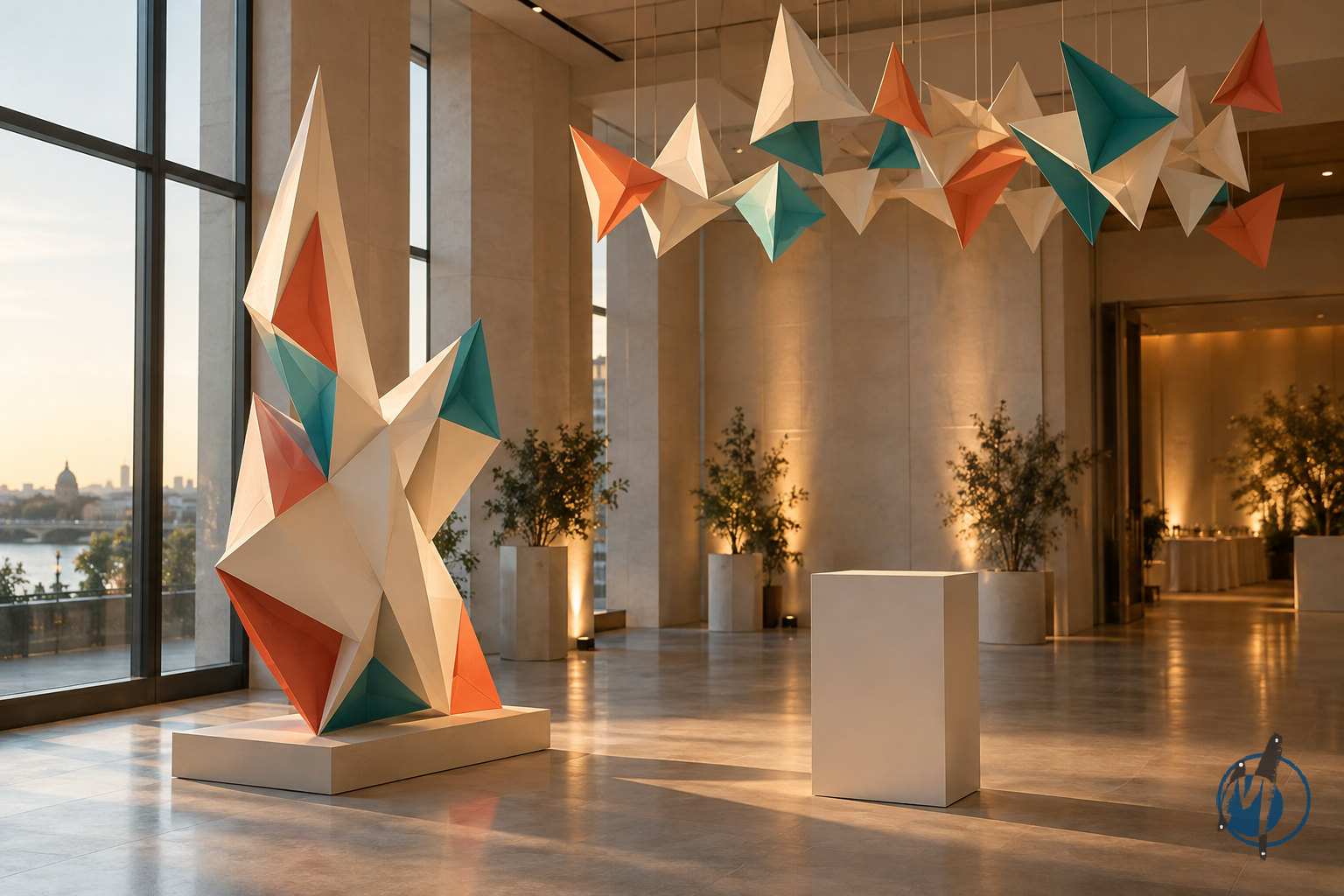
Choose the format after understanding how people will encounter it. A suspended installation can create atmosphere across a room while preserving usable floor space, but it depends on approved attachment points and specialist installation arrangements. A freestanding origami sculpture gives a launch a clear focal point, although its footprint must include the base, protective clearance and any necessary queue space—not just the visible paper form.
Giant paper flowers work well when the concept calls for growth, abundance, softness or expressive colour. Gallery-style pieces suit closer viewing and can support a more intimate product presentation. Not every paper artwork is technically origami: sculptural work may combine folding with cutting, joining and internal supports. Clarifying that distinction helps set honest expectations about construction and appearance.
Format | Strongest application | Design opportunity | Main planning consideration |
|---|---|---|---|
Freestanding origami sculpture | Hero reveal or arrival focal point | A distinctive silhouette linked to the launch idea | Stable base, floor loading and guest clearance |
Suspended folded installation | Overhead atmosphere or spatial wayfinding | Repetition, rhythm and movement across a room | Approved rigging, headroom and access equipment |
Giant paper flowers | Expressive backdrop or immersive setting | Layered colour, botanical references and scale | Petal protection, footprint and proximity to guests |
Gallery-style paper piece | Product storytelling or close-up viewing | Fine folds, controlled lighting and material detail | Display protection and viewing distance |
Modular folded backdrop | Stage framing or photography setting | Repeatable geometry and adaptable composition | Panel joints, camera coverage and transport size |
A hybrid arrangement can work especially well when each element has a clear role. A restrained overhead composition might establish the atmosphere, while a separate sculptural plinth focuses attention on the product. Avoid distributing elaborate forms everywhere: negative space helps guests understand the hierarchy and gives photographers cleaner compositions.
How do you translate brand identity into folded forms?
Begin with the brand's underlying characteristics rather than its colour palette alone. Is its personality precise or playful, understated or expressive, familiar or experimental? Translate those characteristics into design decisions: sharp repeated folds can suggest order, expanding modules can suggest growth, and a gradual change in density can suggest transformation. These are creative interpretations, not fixed meanings, so the concept should be explained and tested with the launch team.
The product itself often offers a better starting point than a generic origami motif. Packaging proportions, surface patterns, ingredient references or the gesture of opening a product can all inform a sculptural language. Rather than simply enlarging a pack, consider how its geometry might unfold into the surrounding space. This produces a more integrated experience and avoids making the installation feel like unrelated event decoration.
Build a concise visual brief
Identify the launch message in one clear sentence.
Select the product feature or brand characteristic to express spatially.
Establish a dominant silhouette and supporting fold pattern.
Specify colours using physical references as well as digital files.
Decide where printed graphics belong and where the artwork should remain unprinted.
Define the relationship between the installation, packaging, stage and product display.
Review colour and finish under the intended event lighting. Paper texture, shadows and neighbouring surfaces can change how a colour reads, while a metallic or glossy finish can introduce distracting reflections. A physical sample beside the actual packaging is more informative than approving a rendering on a laptop screen. Where exact colour reproduction is difficult, a deliberate complementary palette may be more convincing than an imperfect match.
Which materials and safety checks matter most?
Paper selection is a structural and fabrication decision as well as an aesthetic one. A sheet must hold the intended crease, tolerate handling and achieve the required span without unwanted sagging. Heavier stock is not automatically better: it can resist tight folds, crack along a crease or add unnecessary load. The fabrication team should test the proposed stock using the actual fold pattern, joining method and finish.
Environmental conditions matter, particularly when an installation moves between a workshop, a vehicle and an air-conditioned venue. Humidity can affect stiffness and shape, while direct sunlight can alter colour and nearby air-conditioning outlets can disturb lightweight suspended elements. Outdoor or semi-outdoor work requires a separate assessment of wind, rain exposure, anchoring and emergency removal. Indoor paper construction should never be assumed suitable for outdoor use.
Separate the artwork from its load-bearing system
Internal frames, bases, suspension components and attachment points must be designed for the installation rather than improvised on site. For overhead or substantial structures, involve competent rigging professionals and a structural engineer where required by the design or venue. Paper being lightweight does not remove risks associated with falling components, unstable bases or obstructed escape routes.
Confirm requirements with the venue
Obtain written permission for proposed suspension and attachment methods.
Confirm applicable fire-safety requirements and any required material documentation.
Keep sprinklers, detectors, exits, emergency signs and service access unobstructed.
Review separation from luminaires, electrical equipment and other heat sources.
Protect guests from exposed fixings, sharp support edges and trip hazards.
Agree who inspects the completed installation and authorises opening the area.
A fire-retardant treatment is not a universal compliance shortcut. Its suitability depends on the substrate, application, documentation and the requirements of the relevant authority or venue. Treatments can also affect paper colour and folding behaviour. Resolve these questions before full fabrication, and never describe an installation as fireproof simply because a treatment has been applied.
What does the design-to-installation process involve?
A reliable process moves from creative intent to tested construction through explicit approvals. Each approval should answer a different question: does the concept express the brand, does the prototype work physically, and does the site plan satisfy operational requirements? Skipping these distinctions often means discovering a structural or access problem after the appearance has already been approved.
The project schedule should work backwards from the venue handover, not just the event opening. Include time for feedback, material sourcing, prototype revisions, fabrication, packing, transport and on-site checks. Custom colours, specialist finishes or complex rigging may introduce dependencies, so the studio and event team should agree on decision deadlines before production begins.
A step-by-step workflow
Define the brief. Confirm the launch message, audience, primary function, product dimensions, venue, event date and budget parameters.
Survey the site. Record usable dimensions, ceiling conditions, floor restrictions, access routes, loading arrangements, lighting and nearby services.
Develop the concept. Present the proposed forms, placement, colour direction, viewing angles and relationship to other event elements.
Prototype critical details. Test folds, joints, finishes, support connections and any element whose behaviour is uncertain.
Approve the technical plan. Resolve dimensions, assembly sequence, structural requirements, venue permissions and responsibilities.
Fabricate and inspect. Check consistency, fit, finish and assembly interfaces before components are packed.
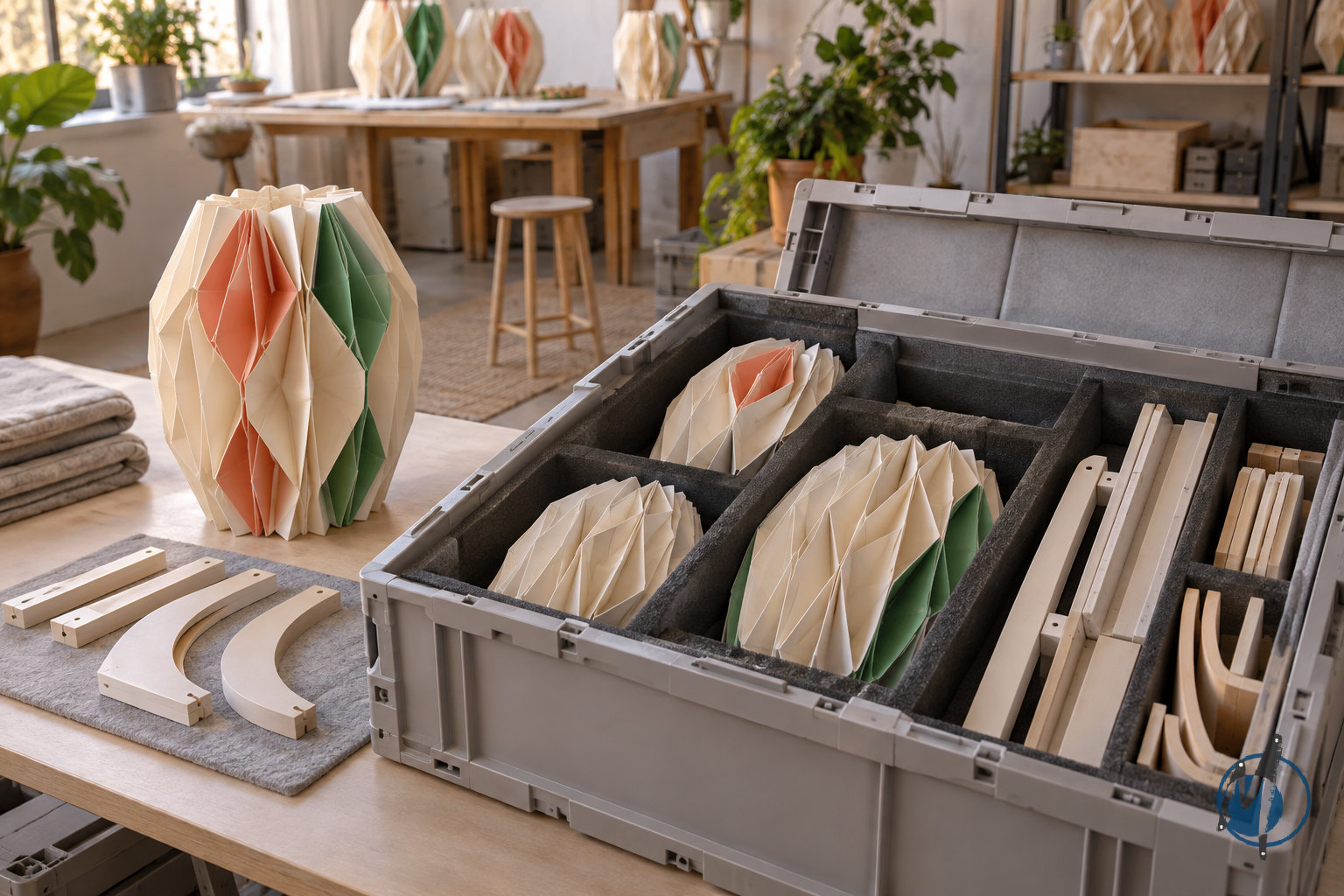
Pack and transport. Label modules, protect vulnerable surfaces and organise crates or cartons around the installation sequence.
Install and rehearse. Assemble, inspect, light and photograph the work; rehearse any reveal mechanism or guest interaction.
Handover and remove. Provide care instructions, establish inspection responsibilities and follow the agreed dismantling and recovery plan.
Assign one person to consolidate client feedback and another to coordinate venue access. Conflicting instructions from brand, production and hospitality teams can cause unnecessary rework. Any late change to scale, location or suspension should trigger a technical review rather than being treated as a simple styling adjustment.
How should you budget and plan logistics for an Indian venue?
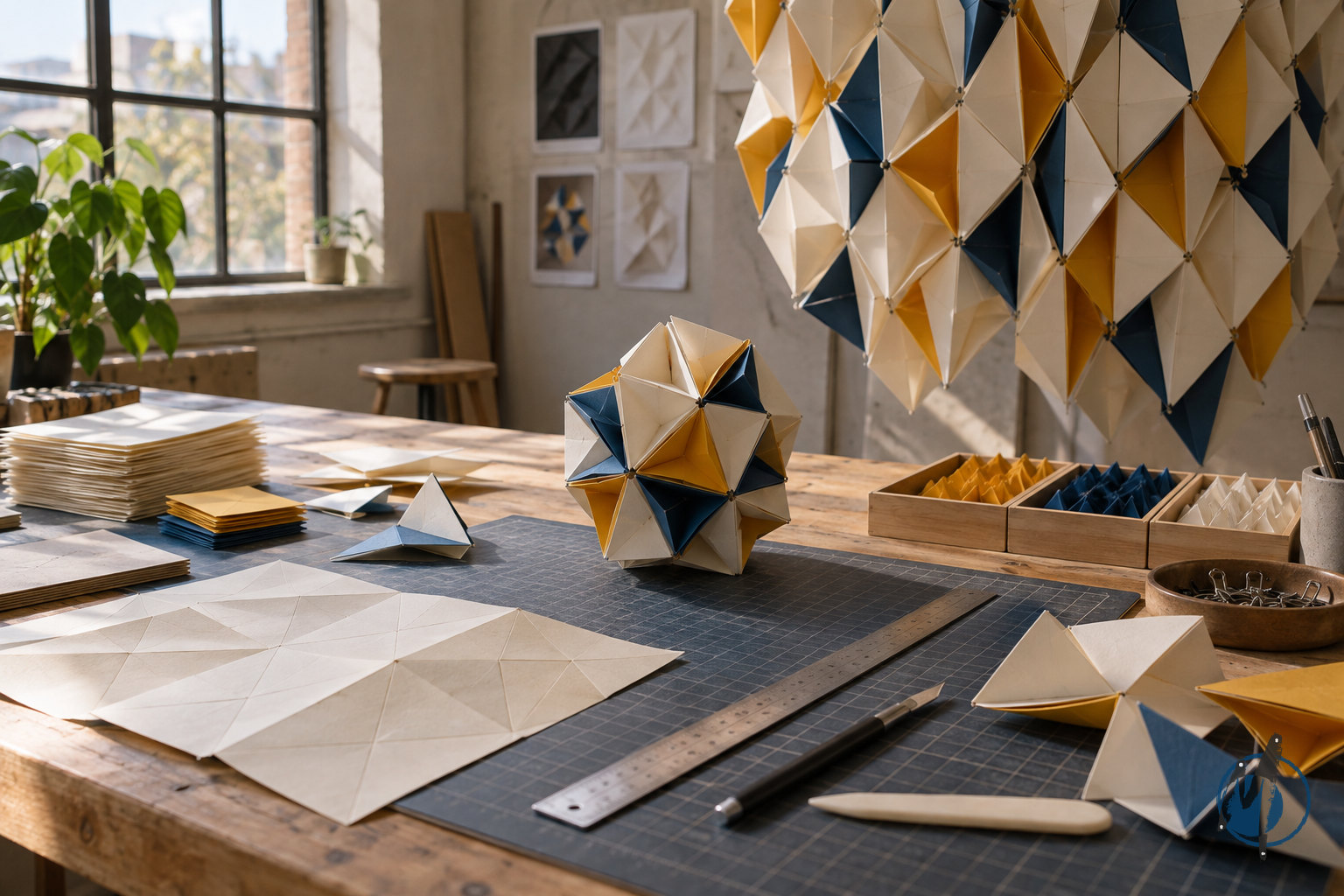
A meaningful quotation needs a defined scope. Cost is influenced by design development, fold complexity, material specification, finishing, support structures, fabrication labour, transport, installation conditions and dismantling. Two artworks with similar visible dimensions can require very different amounts of work if one uses repeated modules and the other relies on unique, hand-finished components.
Ask for a breakdown that distinguishes creative development, production and site execution. Clarify whether the scope includes prototypes, support fabrication, rigging specialists, access equipment, transport, storage, repairs, dismantling and applicable taxes. If an event agency supplies some of these services, document the interfaces so that a necessary task does not fall between suppliers.
Check the building, not only the event room
Will the largest packed component fit through loading doors and service lifts?
Are loading appointments or contractor passes required?
Is there an approved area for unpacking and assembly?
Are installation activities limited by other events or building operations?
Who provides suitable power and work lighting during setup?
Where can empty packaging and spare components be stored?
How will dismantled materials leave the venue after the event?
Modularity often offers better value than simply reducing the artwork's size. Repeated units can simplify fabrication, packing, replacement and later reconfiguration, although their joints still need careful design. When budget is constrained, preserve the hero view and simplify secondary areas rather than spreading detail so thinly that the installation loses its impact.
Plan contingency around actual risks. If transport damage is the concern, specify protective packing and spare modules; if access is uncertain, resolve the access plan. A vague contingency allowance cannot compensate for an untested assembly sequence or an oversized component that cannot enter the building.
How do you design for photography, accessibility and guest interaction?
Design the installation through camera views as well as floor plans. The principal photograph may need to include a person, the product and enough artwork to communicate scale without revealing backstage clutter. Test both horizontal and vertical compositions, and make sure the product remains visible when guests occupy the intended photo position. Fine folds that look impressive nearby can disappear in wide shots, so the silhouette must also work from a distance.
Lighting should reveal the fold geometry without overpowering the product. Directional light can bring out paper texture, but harsh shadows may complicate portrait photography or obscure packaging details. Coordinate with the event lighting team and test exposure on the actual materials. Keep hot equipment appropriately separated from the artwork and avoid placing fixtures where guests or staff could disturb them.
Make participation optional and usable
Provide a clear route past the installation as well as towards it. Consider wheelchair access, different viewing heights, mobility aids and guests who do not want to join a photo queue. Avoid low projections, unexpected changes in floor level or delicate forms that extend into circulation space. Applicable accessibility requirements should guide the final layout rather than being checked only after fabrication.
If interaction is part of the concept, define exactly what guests may touch. A participatory folding station is a different design problem from a delicate display sculpture and needs its own surfaces, materials, supervision and collection system. For a product reveal, specify the reset procedure and rehearse failure scenarios so the team can continue smoothly if a moving element does not behave as expected.
What mistakes should you avoid, and can the installation be reused?
The most common mistake is approving a persuasive rendering without testing its physical assumptions. Renderings can conceal supports, understate the footprint and show paper behaving more rigidly than it will in reality. Other avoidable problems include making the artwork compete with the product, ignoring venue airflow and leaving the dismantling plan until the final evening.
Reuse is easiest when it is designed in from the beginning. Detachable modules, durable storage arrangements and replaceable outer elements can support later displays, but a paper installation is not automatically reusable or recyclable. Adhesives, coatings, laminated layers and mixed-material assemblies may complicate recovery. Describe environmental benefits precisely and verify local collection options before making sustainability claims.
Pre-production approval checklist
The concept clearly supports the launch message.
Product visibility has been checked from key guest and camera positions.
Physical folds, colour and finishes have been sampled.
Actual dimensions and access routes have been verified.
Supports, suspension and venue permissions are resolved.
Fire-safety and accessibility requirements have been reviewed.
Packing, installation and dismantling responsibilities are assigned.
Care instructions and replacement needs are documented.
Reuse, storage or material separation has a named owner.
For reuse, identify the next application rather than simply requesting a “sustainable installation”. A gallery piece for an office reception may need a different finish and mounting system from a one-night stage backdrop. Store reusable components dry, supported and protected from crushing, and inspect them before each subsequent installation. Transport and storage requirements belong in the reuse decision too.
How Messketeers can help with your brand launch?
Messketeers is an India-based creative studio offering brand identity, custom print and packaging, OEM stationery manufacturing, and experiential decor and paper art installations. Within its Sculptural & Origami Art Installations offering, the relevant formats include giant paper flowers, origami sculptures, suspended installations and gallery pieces. These provide different ways to express a launch idea through scale, material and spatial storytelling.
The starting point should be your brand and launch objective, not a predetermined decorative motif. Share the product story, visual identity, packaging references and intended guest experience so the discussion can establish which installation format belongs in the space. Connecting the physical artwork with the wider identity and printed touchpoints can help the event feel coherent without repeating the same graphic everywhere.
What to share when enquiring
The launch date, city and venue details.
Photographs, drawings and available site dimensions.
Your product, brand guidelines and launch message.
The installation's main purpose and preferred visual direction.
Budget parameters and any required reuse applications.
Known venue restrictions and the event team's contact details.
Ask the Messketeers team to clarify the proposed creative and production scope, including which technical tasks require venue-appointed or specialist partners. A well-defined collaboration should leave everyone clear about design approvals, fabrication, access, installation and removal. The result to aim for is not simply an impressive paper object, but an origami installation that makes the product launch easier to understand, experience and remember.
Frequently asked questions
What is an origami installation for a brand launch?
It is a custom spatial artwork using folded forms to communicate a launch concept, frame a product or shape the guest experience. It can be freestanding, suspended or incorporated into a backdrop. Some installations combine origami with cutting, joining and internal supports, so the construction approach should be clarified during design.
Can an origami installation be used outdoors?
Only when its materials, supports and installation method are designed for the specific outdoor conditions. Paper can be affected by humidity, rain and wind, while lightweight elements may move unexpectedly. Assess exposure, anchoring, weather contingencies and removal procedures with the production team and venue rather than adapting an indoor design without review.
How much does a custom origami installation cost?
The cost depends on design complexity, materials, handwork, supporting structures, transport and installation conditions. A useful quotation should separate design, fabrication and site execution, and clarify dismantling, equipment and specialist responsibilities. Share venue information, the launch objective and budget parameters so the proposed scope can be assessed realistically.
Are suspended paper installations safe for event venues?
They can be appropriate when designed and installed with approved attachment points, suitable components and competent oversight. Venue permissions, fire-safety requirements, headroom and clearances must be resolved before installation. Lightweight paper does not eliminate overhead risks, and structural or rigging specialists may be required depending on the design and venue.
Can the installation be reused after the launch?
Reuse is possible when modular construction, detachable connections, protective packing and future display needs are considered from the start. Confirm where the artwork will go next and who will store it. Inspect components before reinstalling them, and avoid assuming that paper combined with coatings, adhesives or other materials is readily recyclable.
What should I send Messketeers for an installation enquiry?
Send the launch date, city, venue photographs or drawings, product details, brand guidelines and budget parameters. Explain whether the installation should support a reveal, photography, arrival experience or close-up display. Include known access and suspension restrictions, plus any reuse goals, so the team can discuss an appropriate format and scope.