 Messketeers
Employee Welcome Kit Ideas India: A Practical Guide
· 12 min read
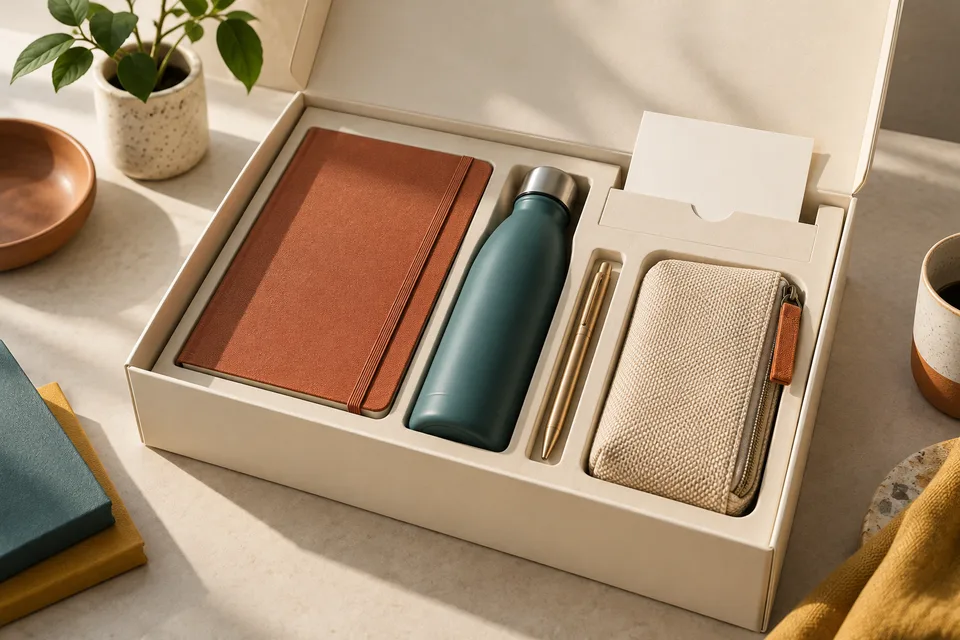
Quick answer: The best employee welcome kit ideas in India combine everyday essentials, a personal welcome and a clear introduction to your workplace. Start with a notebook, reliable pen and onboarding information, then add role-relevant merchandise and a custom box suited to office handovers or individual dispatch. Prioritise usefulness, inclusive choices and consistent delivery over filling a box with more products.
1. What should an employee welcome kit include?
A welcome kit should help someone feel expected, equipped and connected. That means balancing practical tools with human touches: something they can use immediately, something that explains the organisation, and something that makes the welcome feel personal. A coordinated set of modest, well-made items often creates a stronger impression than a crowded assortment of unrelated merchandise.
Begin with a core kit that works across departments and locations. A notebook and pen remain useful even in digital workplaces, while a concise welcome card can direct new joiners to their induction schedule, support contacts and onboarding portal. Keep passwords, sensitive documents and access credentials out of printed kit materials.
Build around four essential functions
Help them work: A notebook, dependable pen, document folder or compact desk organiser.
Help them settle in: A durable bottle, suitable mug or useful carry pouch.
Help them connect: A personal welcome note and an introduction to workplace culture.
Help them take the next step: A tested QR code or short URL leading to maintained onboarding information.
Treat laptops, access cards and other controlled equipment as a separate operational stream unless IT and HR explicitly agree otherwise. The welcome kit can explain how equipment will arrive without creating the impression that an attractive merchandise box replaces work readiness. Every included item should have a reason to be there and an owner responsible for its accuracy or quality.
2. Which welcome kit ideas suit different employees?
The most effective curation starts with working context, not seniority. A field employee, an office-based designer and a remote analyst have different daily routines. Create a shared foundation that expresses the same welcome, then adapt selected items to the role rather than designing an entirely different programme for every team.
For distributed teams, favour compact items that travel well and do not require a particular desk setup. For employees who commute or visit clients, a practical bag, document sleeve or dependable bottle may be more useful. Apparel can work well when sizing is collected privately and exchanges are planned; without that process, it can create unnecessary friction.
Employee context | Useful kit direction | Personalisation opportunity | Watch-out |
|---|---|---|---|
Office-based joiner | Notebook, pen, bottle and desk accessory | Team welcome card | Avoid duplicating items already provided at work |
Remote joiner | Stationery, cable pouch and compact desk mat | Manager note and onboarding link | Check dimensions and residential delivery details |
Field or sales employee | Carry pouch, document sleeve and bottle | Role-specific reference card | Prioritise durability and portability |
Intern or graduate hire | Notebook, pen and learning planner | Peer buddy introduction | Make support information easy to find |
Leadership hire | Refined stationery and restrained merchandise | Thoughtful personal letter | Avoid excessive packaging or status-driven excess |
International joiner | Lightweight stationery and uncomplicated accessories | Location-relevant welcome message | Review customs and destination restrictions |
Adapt without creating unequal welcomes
Keep the level of care consistent across variants. Differences should solve practical needs, not signal that one group matters more than another. A simple base-kit-plus-module system makes procurement, packing and replenishment easier while still giving employees something relevant to their work.
3. How do you set a realistic welcome kit budget in India?
Budget for the complete delivered experience, not just the products visible in a mock-up. Item cost is only one component. Customisation, samples, packaging, assembly, storage, freight and applicable taxes can materially change the final spend. Individual home deliveries also behave differently from a consolidated shipment to one office.
Ask suppliers to separate one-time development costs from recurring production and fulfilment costs. This makes it easier to compare a first batch with later replenishment orders. It also reveals whether a lower unit quote depends on buying more stock than your hiring plan is likely to use.
Use a landed-cost worksheet
Products: Materials, construction, finishes and item quantities.
Branding: Printing, embroidery, engraving or other suitable decoration.
Development: Structural design, samples, tooling and setup where applicable.
Packaging: Outer box, inserts, protective materials and shipping carton.
Operations: Assembly, personalisation, inventory handling and storage.
Delivery: Destination-based freight, tracking, returns and replacement handling.
Taxes and cross-border costs: Applicable GST, duties and clearance charges, confirmed for the transaction.
If the budget needs tightening, remove a low-value item before reducing the quality of every item. A reliable pen and well-bound notebook can do more for the experience than several novelty accessories. Request quotes against the same written specification, quantities and delivery assumptions; otherwise, apparent savings may simply reflect different materials or excluded services.

4. How can branding feel thoughtful rather than promotional?
An employee welcome kit is not a trade-show giveaway. Its job is to make someone comfortable using the products in everyday life, including outside the office. Restrained branding, consistent colours and good materials can communicate identity without placing a large logo on every surface.
Develop one visual language across the kit: a considered colour palette, compatible print finishes and a clear hierarchy for information. Put expressive storytelling on the welcome card or inside the box, where employees can choose to engage with it. Keep high-use objects such as bottles and bags visually versatile.
Choose the right depth of customisation
Brand application: Existing products decorated with approved artwork; useful when simplicity is the priority.
Coordinated curation: Selected products matched through colour, finish, packaging and printed materials.
Custom stationery manufacturing: Notebooks, planners or folders developed around agreed specifications, subject to production feasibility and order requirements.
Employee-level personalisation: Names or individual messages added through a controlled data and approval process.
For custom notebooks, specify size, ruling, paper suitability, binding, cover material and opening behaviour rather than approving appearance alone. Check whether the paper suits the pens included in the kit. If names are being added, confirm spelling, preferred names and how late joining-date changes will be handled before production begins.
5. What makes a custom welcome kit box work well?
Good packaging protects the contents, presents them clearly and remains manageable to ship. Start structural design with the actual product dimensions and weights. A box chosen only for its appearance may need excessive filler, allow items to move, or become unnecessarily expensive to dispatch.
The presentation box and the shipping carton serve different purposes. A decorative box may still need an outer corrugated shipper, especially for residential deliveries. Fragile items require appropriate cushioning and separation, while heavier objects should not press against stationery or printed cards during transit.
Evaluate packaging beyond the unboxing photograph
Product fit: Each item stays in place without being difficult to remove.
Protection: Materials and structure suit the weight and fragility of the contents.
Packability: The assembly team can reproduce the intended arrangement consistently.
Shipping efficiency: Avoidable empty space is removed without compromising protection.
Accessibility: Opening does not require excessive force or complicated layers.
Disposal: Components can be separated, with accurate material guidance where useful.
Be specific about environmental claims. A paper-based box is not automatically recyclable in every local system, particularly when finishes or mixed-material elements are involved. Ask about material composition, minimise unnecessary components and test practical reuse claims. A durable storage box is only a benefit if employees have a realistic reason to keep it.
6. How do you plan Pan-India and global dispatch?
Delivery planning belongs in the brief from the beginning. Office distribution, individual home deliveries and overseas shipments need different packing, data and documentation workflows. For Pan-India dispatch, confirm serviceability at the destination PIN-code level and agree how address issues, failed attempts and returned parcels will be resolved.
Collect only the employee information required for delivery and approved personalisation. Usually, the fulfilment workflow needs a recipient name, complete delivery address and an appropriate contact number. Use an access-controlled transfer method, limit who can view the data and agree how long it will be retained. Keep addresses out of broadly shared project presentations and artwork files.
Separate domestic and international planning
For domestic shipments, validate addresses before labels are generated and decide whether the office or employee will receive delivery updates. For global dispatch, confirm the destination country's import requirements and the courier's restrictions before finalising products. Food, seeds, liquids, batteries and some natural materials can introduce additional checks; a simple stationery-led kit may be easier to manage, but still requires review.
Confirm who prepares invoices, product descriptions and other required shipping documents.
Establish who is responsible for duties, taxes and clearance queries.
Review carrier requirements for the exact products and destinations.
Agree on tracking visibility and escalation contacts.
Define the response to damage, loss, failed delivery and returned shipments.
Avoid promising a fixed arrival date before serviceability and clearance variables are assessed.

7. What is the step-by-step process for producing welcome kits?
A dependable kit programme moves through clear approval gates. HR, brand, procurement and operations should agree on the brief before product sourcing begins. IT, finance or legal may also need to review particular elements, such as links, invoicing, data handling or international shipment responsibilities.
Appoint one decision-maker to consolidate feedback. Conflicting comments from different teams can otherwise produce repeated sampling, mismatched specifications and uncertain approvals. Work backwards from the date kits need to arrive, allowing for development, production, inspection, assembly and dispatch rather than treating shipment as the only deadline.
Follow this production sequence
Define the audience and occasion. Record employee locations, working contexts, expected hiring pattern and whether the kit supports preboarding, day one or an induction event.
Set the scope and budget. Agree on the core contents, optional modules, delivery model and complete landed-cost assumptions.
Approve the creative direction. Establish colours, branding placement, materials, information hierarchy and packaging intent.
Confirm product specifications. Document dimensions, construction, decoration methods, acceptable substitutions and relevant quality requirements.
Review physical samples. Assess representative products and packaging. Distinguish artwork approval from approval of materials, colour and function.
Lock content and personalisation. Check names, welcome messages, URLs and QR codes. Assign ownership for keeping linked information current.
Authorise production and inspection. Confirm the approved reference sample, inspection approach and process for resolving defects.
Assemble and verify. Use a packing guide and check contents against the correct kit variant and recipient record.
Dispatch and reconcile. Share tracking through the agreed channel, monitor exceptions and document unresolved deliveries.
Review and replenish. Use feedback and inventory records to refine the next batch without losing specification control.
For ongoing hiring, decide which components can be held as common stock and which should be personalised later. This reduces the risk of unusable name-specific inventory when joining plans change. Set replenishment triggers around actual consumption, storage conditions and supplier lead times rather than ordering solely for the largest available quantity discount.
8. What should you check before approving a welcome kit?
Digital mock-ups are useful for direction, but they cannot demonstrate writing quality, binding strength, bottle performance or transit protection. Review a representative physical kit whenever feasible, and make clear which features the sample does and does not represent. A generic sample with digital branding is not the same as a fully finished production reference.
Test the kit as an employee would use it. Write in the notebook, open the pouch, examine the print edges and check whether the box can be opened comfortably. For drinkware, request relevant material and suitability documentation rather than assuming that appearance proves fitness for use.
Pre-production approval checklist
Contents match the approved brief and employee context.
Materials, dimensions, colours and finishes are documented.
Notebook paper and binding suit everyday use.
Pens write consistently and do not damage adjacent items in packing.
Product decoration is legible, well positioned and appropriately durable.
Personalised names and variant assignments have been verified.
Printed information is accurate and QR destinations work on mobile.
Packaging holds products securely without excessive filler.
A representative packed shipment has been assessed for transit risks.
Recipient-data access, transfer and retention are agreed.
Damage, defects and delivery exceptions have a named owner.
The final approved specification is available to production and fulfilment teams.
Record approval in writing, including any accepted deviations. Agree on inspection and replacement procedures before the batch is completed, not after an issue appears. For repeat orders, retain a reference sample or an equivalent specification record so that changes in paper, fabric, colour or construction are noticed rather than silently accepted.
9. What common mistakes should you avoid, and how do you measure success?
The most common mistake is treating the welcome kit as a collection of objects rather than an onboarding touchpoint. A beautiful package arriving late, containing the wrong name or linking to outdated information can undermine the care invested in its design. Operational accuracy is part of the creative experience.
Another mistake is assuming that every employee wants the same lifestyle products. Food can raise dietary, allergen and shelf-life concerns; apparel requires size management; fragile mugs may complicate delivery. These items are not automatically unsuitable, but they need a clear reason for inclusion and a process that addresses their practical limitations.
Avoid these preventable problems
Adding novelty merchandise simply to make the box look full.
Printing a large batch of onboarding information that changes frequently.
Approving an oversized box before the product selection is final.
Substituting materials or products without reviewing the effect on the kit.
Choosing apparel without an inclusive sizing and exchange approach.
Treating one office delivery and many home deliveries as equivalent scopes.
Leaving customs responsibility or failed-delivery handling undefined.
Requesting unnecessary employee information for personalisation.
Measure success through delivery accuracy, condition on arrival, completeness and actual product usefulness. Ask new joiners which items they used, whether the next onboarding step was clear and what felt unnecessary. Use that feedback to improve the programme, but do not attribute employee retention or engagement changes to the kit alone; the wider onboarding experience matters far more.
10. How Messketeers can help with employee welcome kits?
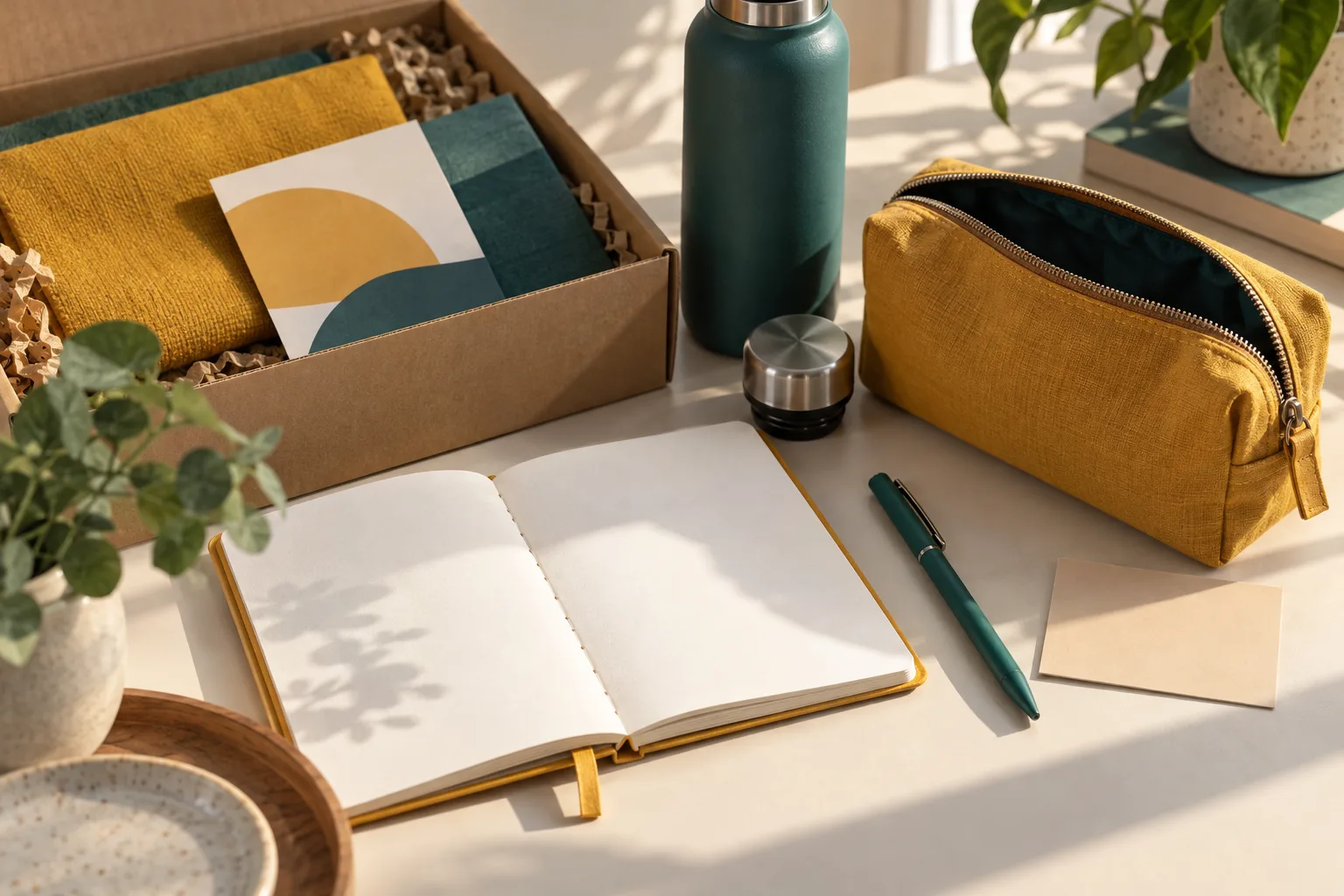
Messketeers is an India-based creative studio working across brand identity, custom print and packaging, OEM stationery manufacturing, experiential decor and paper art installations. Its Global OEM Stationery Manufacturing — Corporate Onboarding & Welcome Kits offering brings together kit curation and design, branded merchandise, custom kit boxes, and Pan-India and global dispatch.
For a welcome kit project, that connected scope allows the conversation to begin with the employee experience rather than a standalone product catalogue. The stationery, merchandise and packaging can be considered together, with delivery requirements informing the design from the outset. Specific materials, quantities, production schedules and destination feasibility should be confirmed against the project brief.
What to include in your enquiry
Your organisation's brand guidelines and desired welcome experience.
Employee roles, work settings and intended kit variants.
Expected quantities and whether this is a single batch or ongoing programme.
A budget that distinguishes product spend from total delivered cost.
Preferred items, exclusions and personalisation requirements.
Office, residential or international delivery destinations.
Required arrival dates and internal approval responsibilities.
The strongest starting point is a focused brief: who the kit is for, what it should help them do and how it will reach them. Messketeers can help translate that brief into coordinated stationery, merchandise and packaging, with dispatch planned as part of the project. The goal is a welcome that feels thoughtful on opening and remains useful after the first day.
Frequently asked questions
What are the best employee welcome kit ideas in India?
Start with a useful notebook, dependable pen, personal welcome card and a clear route to onboarding information. Add a bottle, pouch, bag or desk accessory according to the employee's working context. The best selection is coordinated, practical and easy to deliver, rather than packed with novelty merchandise that may never be used.
How should we budget for employee welcome kits?
Calculate the complete delivered cost, including products, branding, samples, packaging, assembly, storage, freight and applicable taxes. Ask for one-time development charges and recurring costs to be shown separately. Compare supplier proposals against identical specifications and delivery assumptions, especially when choosing between bulk office delivery and individual employee shipments.
Can employee welcome kits be personalised?
Yes. Personalisation can include an employee's preferred name, a manager's message or a role-specific onboarding card. Confirm spelling and approvals before production, and decide how changes to joining dates will be handled. Collect only the necessary information and transfer it securely, with access and retention agreed between the relevant teams.
What should a remote employee welcome kit contain?
A remote kit should prioritise compact, useful items such as stationery, a cable pouch and a desk mat that suits different workspaces. Include a personal welcome and an accessible onboarding link. Check residential delivery details carefully, avoid unnecessary fragile items and coordinate separately with IT for laptops, access and other controlled equipment.
Can welcome kits be dispatched internationally from India?
International dispatch can be planned, subject to destination requirements, product restrictions and courier serviceability. Review the exact contents before production, particularly food, liquids, batteries or natural materials. Confirm shipping documentation, customs responsibilities and who will pay duties or taxes. Do not assume a domestic kit can be shipped overseas without changes.
How can we make welcome kits more environmentally responsible?
Choose durable products employees are likely to use, reduce unnecessary items and size packaging around the actual contents. Minimise mixed-material components where practical and verify material claims with suppliers. Avoid describing the whole kit as sustainable without evidence; specific information about composition, reuse and locally relevant disposal options is more useful.