Corporate Onboarding Kit Supplier: A Complete Buyer’s Guide
· 11 min read
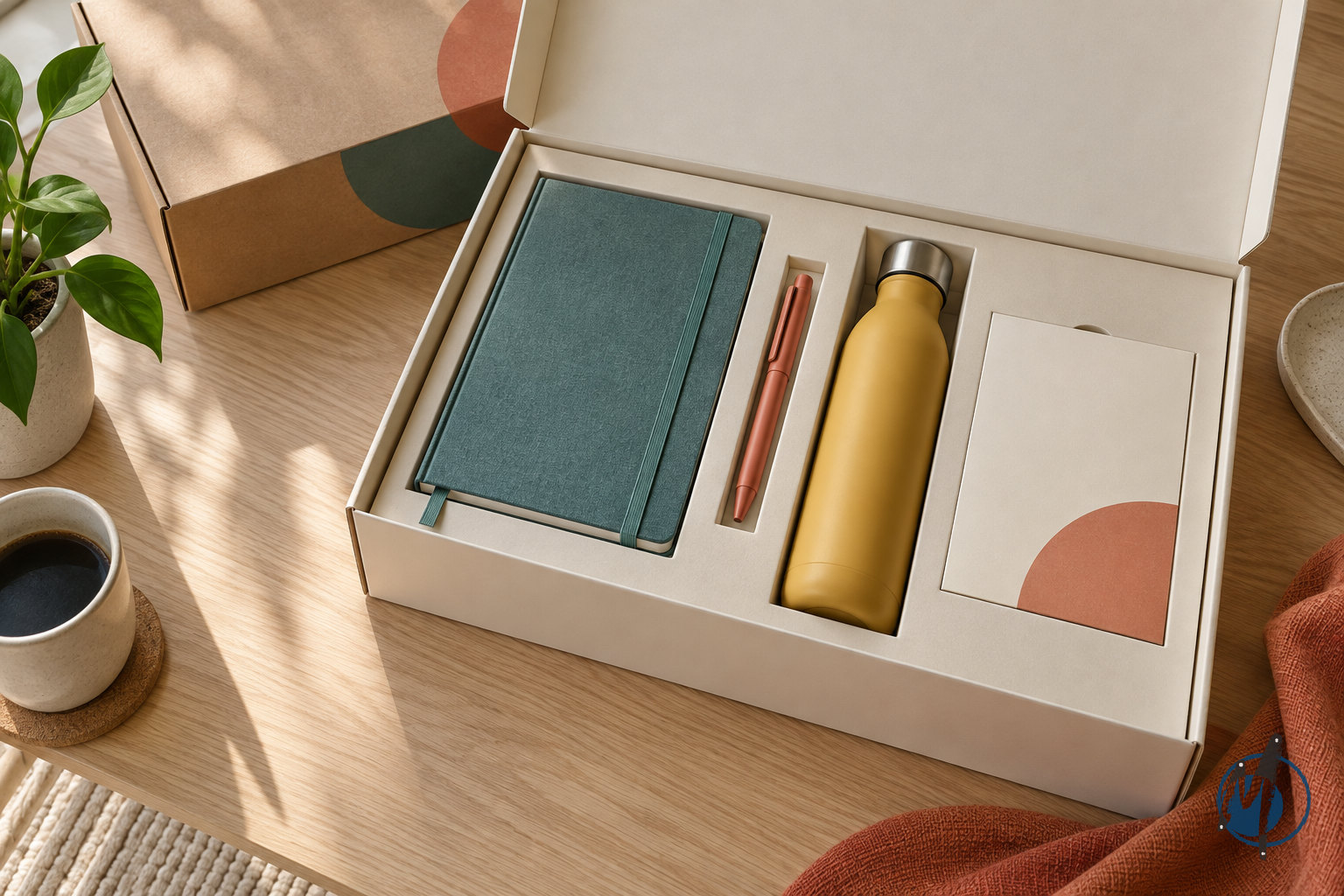
Quick answer: A corporate onboarding kit supplier brings together useful employee essentials, branded merchandise, custom packaging and coordinated delivery for new hires. The right partner should translate your employer brand into a practical welcome experience while managing samples, production quality, packing accuracy and dispatch. For India-based teams hiring across locations, assess design capability and delivery operations together—not just the merchandise catalogue.
1. What does a corporate onboarding kit supplier actually do?
A corporate onboarding kit supplier turns a collection of products into a repeatable employee welcome programme. That includes deciding what belongs in the kit, adapting brand assets to different materials, developing packaging, coordinating manufacturing and preparing orders for delivery. Some suppliers primarily resell promotional products; others offer deeper design and manufacturing coordination. Understanding this distinction helps you compare proposals on the work actually included.
An onboarding kit also serves a different purpose from a generic corporate gift. It introduces the organisation, helps someone settle into work and communicates the care behind the employee experience. A notebook, welcome card and well-considered desk accessory can work together effectively when each has a clear role. Adding more products does not automatically create a better welcome.
Look for four connected capabilities
Kit curation and design: Product selection, visual direction and a coherent unboxing sequence.
Branded merchandise: Suitable products and branding methods matched to each material.
Custom kit boxes: Packaging engineered around the contents, presentation and shipping needs.
Dispatch coordination: Packing, address handling, shipment tracking and an agreed exception process.
Before appointing a supplier, establish who owns each stage. If different partners handle merchandise, boxes and fulfilment, your team may become responsible for resolving fit, timing and quality problems between them. A coordinated scope should make those handoffs explicit, even when specialist production partners are involved.
2. What should you include in an employee welcome kit?
Start with the employee’s first working week rather than a list of popular promotional items. Office-based, remote, field and hybrid employees have different needs. A useful core kit might include a notebook, a dependable writing instrument, a welcome message and an everyday accessory. Additional items should reflect the role, working environment and organisation’s culture—not simply fill empty space in the box.
Consider how every item will be used, maintained and transported. Apparel introduces sizing and exchange requirements. Drinkware needs appropriate material specifications and secure packing. Electronics require closer attention to compatibility, product documentation, warranties and applicable compliance requirements. These considerations do not rule out particular products, but they do change the supplier brief and the level of verification needed.
Build the kit in layers
Essential layer: Items that support work or orientation, such as stationery and a concise welcome guide.
Brand layer: A coordinated colour palette, thoughtful illustration or a distinctive paper insert.
Personal layer: A correctly spelled name or team-specific message, where operationally practical.
Optional layer: Role-specific accessories or a choice-based item instead of a universal inclusion.
Keep onboarding information accessible beyond the physical kit. A printed card can point employees towards an approved digital resource, but essential HR instructions should not depend on a parcel arriving on time. If you use a QR code, test the final printed version and ensure the destination is maintained by the appropriate internal team.
3. How do you compare suppliers beyond the merchandise catalogue?
The most useful comparison is between operating models, not attractive product photographs. A catalogue-led supplier may suit a straightforward requirement with limited customisation. A design-led studio may be a better fit when the kit needs a distinctive identity and coordinated packaging. An OEM-oriented partner becomes particularly relevant when stationery specifications, repeat production or product-level customisation matter.
Supplier model | Best suited to | What to verify |
|---|---|---|
Catalogue-led merchandise supplier | Familiar products with straightforward branding | Actual stock, branding samples and replacement terms |
Design-led creative studio | Cohesive welcome experiences and custom packaging | Production coordination, sample approvals and dispatch scope |
OEM stationery manufacturing partner | Custom notebooks, paper products and repeat specifications | Materials, construction, tolerances and reorder consistency |
Fulfilment-led provider | Distributed deliveries and recurring order handling | Inventory visibility, packing controls and address workflows |
These categories can overlap. Ask suppliers to explain which activities they perform directly, which they coordinate and who remains accountable when something goes wrong. Outsourced specialist work is not inherently a weakness; unclear responsibility is. A strong proposal should connect creative intent to specifications, approval points and a workable delivery plan.
Ask for evidence that answers your brief
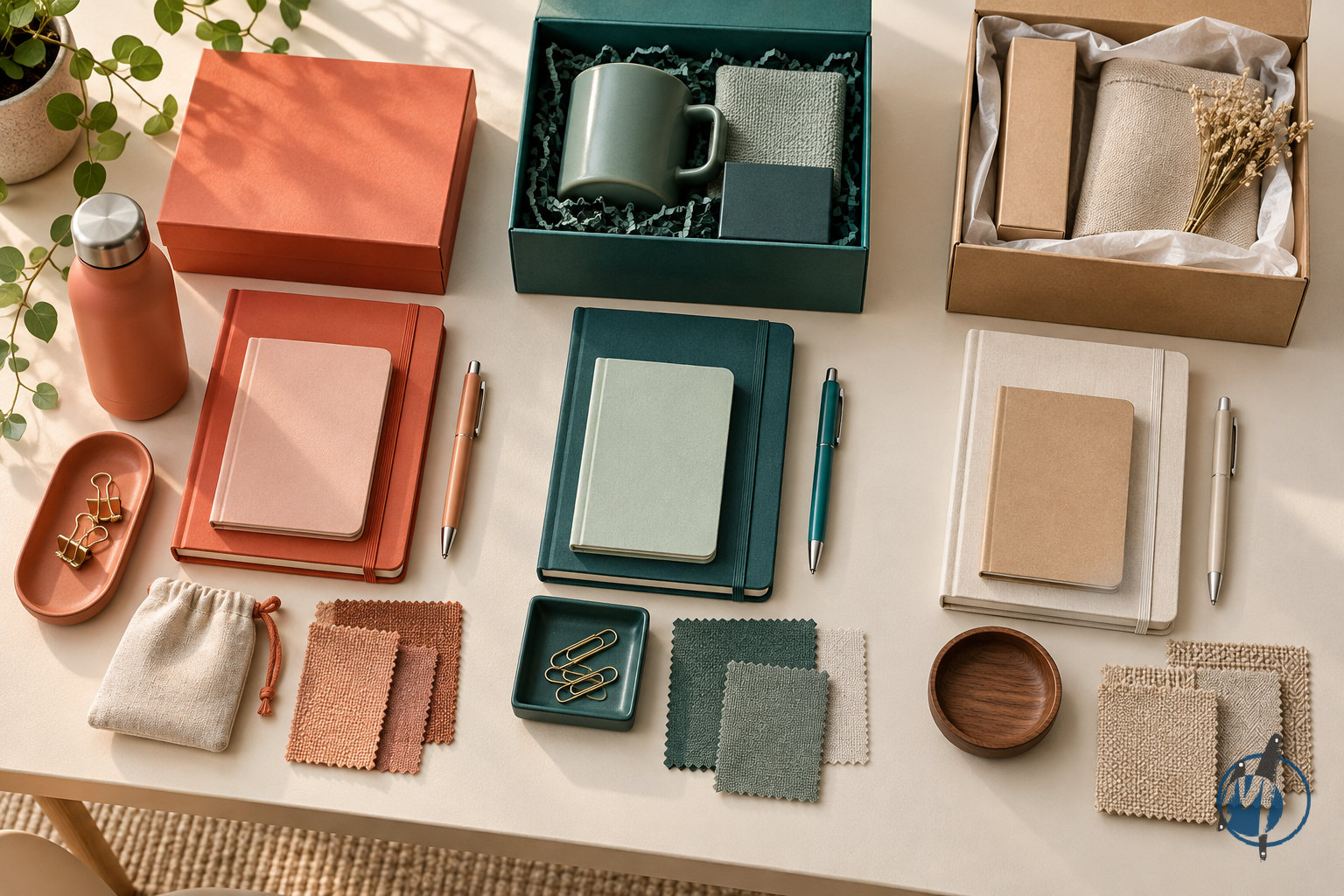
Request relevant physical samples, a proposed bill of materials, an indicative packing layout and a clear explanation of quality checks. Review the notebook binding, print sharpness, merchandise finish and box structure—not only presentation photography. For repeat programmes, ask how approved specifications and artwork versions will be retained for future orders.
4. What determines the cost of a corporate onboarding kit?
The meaningful budget is the total cost of producing and delivering a complete kit. A low item price can become misleading once customisation, packaging, assembly and freight are added. Ask suppliers to separate one-time development charges from recurring production costs so that an initial order and a later reorder can be evaluated fairly.
Product specifications have a direct effect on cost. For stationery, paper, page count, binding and cover construction all matter. For packaging, board choice, dimensions, inserts and finishing affect both production and transport. Branding methods also differ in setup requirements and suitability. Comparing quotes without matching these specifications can make unlike proposals look equivalent.
Request a clearly itemised quotation
Products, quantities and material specifications.
Branding methods, artwork preparation and setup charges.
Box construction, inserts and protective shipping materials.
Sampling, assembly, personalisation and quality inspection.
Storage or scheduled release charges, where applicable.
Freight, taxes and any international delivery-related charges.
Replacement terms, quote validity and permitted substitutions.
Separate essential features from optional upgrades before negotiating. Removing a nonessential item may preserve quality better than reducing every specification. Ask whether a smaller, better-fitted box could lower shipping exposure without compromising protection. For recurring hiring, discuss the commercial implications of batch production versus individual releases rather than assuming one model is always cheaper.
5. How should you brief a supplier and manage the project step by step?
A clear brief reduces avoidable rounds of revision and makes supplier proposals easier to compare. Include the audience, delivery locations, intended arrival date, quantity, budget scope and required customisation. Clarify whether your date means dispatch from the supplier or delivery to the recipient: these are different milestones, especially when employees are spread across cities or countries.
Nominate one person to consolidate feedback from HR, procurement, brand and operations. Internal disagreements can otherwise surface after a sample has been approved. Ask the supplier for a milestone plan based on the actual products and production methods; do not rely on a generic turnaround promise before the specifications are settled.
Follow this approval sequence
Define the programme: Identify employee groups, quantities, destination types and the purpose of each kit variant.
Agree on the scope: Confirm products, packaging, branding, assembly and dispatch responsibilities.
Approve the creative direction: Review colours, artwork placement, messaging and the proposed unboxing experience.
Review specifications and samples: Check materials, product dimensions, print results and box fit together.
Sign off production: Approve the bill of materials, artwork versions, sample references and delivery milestones in writing.
Prepare recipient data: Validate names, addresses and any personalised details through a controlled process.
Inspect and dispatch: Complete agreed checks, reconcile quantities and share shipment information.
Review the outcome: Record damage, delivery exceptions and employee feedback before the next batch.
Treat changes after approval as controlled revisions. A different bottle shape can require a new insert; an additional product can change the box dimensions and freight. Ask for the cost and schedule impact before approving substitutions or additions, and keep the final specification accessible to everyone responsible for the order.
6. How do custom boxes and quality checks protect the welcome experience?
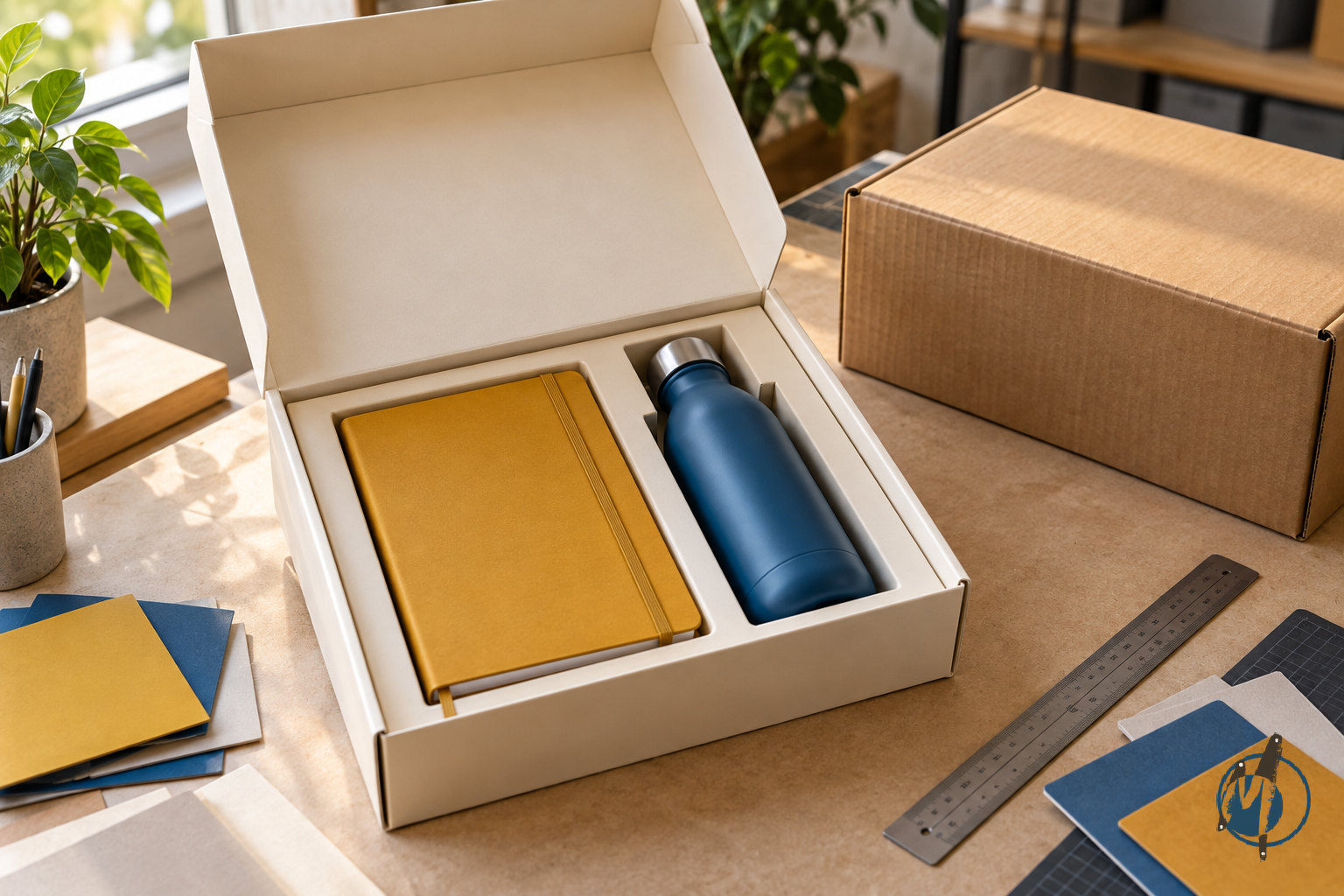
Packaging needs to perform two jobs: present the kit well and protect its contents. A decorative presentation box is not automatically suitable as a shipping container. The supplier should distinguish between the inner welcome box and any outer shipper, cushioning or moisture protection needed for the delivery route. This is especially important when combining paper goods with hard or heavy merchandise.
Design the packaging around confirmed product dimensions. Excess space can let items move during transit, while an overly tight fit makes packing difficult and can damage products. Inserts should hold items securely without turning unboxing into a struggle. Review a fully packed sample rather than approving an empty box and separate merchandise samples in isolation.
Use a practical approval checklist
Product sizes and materials match the agreed specification.
Branding is legible, correctly positioned and appropriate for the surface.
Notebook pages, binding and finishing meet the approved reference.
All products fit securely without rubbing or crushing adjacent items.
Personalised details match the approved recipient file.
Inserts, cards and accessories are present in the correct quantities.
The shipping configuration is appropriate for weight and fragility.
The inspection method and process for resolving defects are documented.
Where damage risk is material, agree on transit testing appropriate to the packed kit and likely handling conditions. Also define what counts as an unacceptable defect before production begins. An approved sample provides a useful reference, but it should be supported by written specifications and inspection criteria so that acceptance does not depend entirely on subjective judgement.
7. How do Pan-India and global dispatch requirements change the plan?
Delivering bulk cartons to one office is different from sending individual kits to employees’ homes. Distributed deliveries require recipient-level data, address validation, shipment tracking and a process for unsuccessful attempts. Confirm destination serviceability and the handling of remote locations before making arrival commitments to employees. A dispatch confirmation alone does not establish that the kit has reached its recipient.
For Pan-India orders, clarify packing requirements, courier coordination, tracking communication and responsibility for returns or address corrections. Align invoice and shipment documentation with your procurement and tax processes. If the programme involves recurring new hires, specify how approved recipient lists will be released and how packed quantities will be reconciled against those lists.
Plan international shipments separately
Confirm which products can be shipped to each destination.
Review restrictions affecting batteries, liquids, food or other regulated contents.
Agree who prepares customs documentation and verifies declared product details.
Establish responsibility for duties, taxes and clearance-related charges.
Clarify what happens when a shipment is delayed, refused or returned.
Recipient data also deserves a defined handling process. Share only the details necessary for fulfilment, use an agreed secure transfer method and establish who can access the information. Ask how long the supplier and relevant delivery partners need to retain it. Global dispatch should be treated as a destination-specific logistics exercise, not simply domestic fulfilment with a different label.
8. How can you make onboarding kits more sustainable and easier to reorder?
Begin with usefulness and restraint. A product that employees genuinely use is generally a better design choice than an unnecessary item added to increase perceived volume. Reduce avoidable packaging layers, select appropriate protection and examine whether materials can be separated after use. Sustainability decisions should consider the whole kit rather than focusing on one visibly paper-based component.
Ask for evidence behind material claims. Recycled content, certified sourcing and recyclability are different concepts, and one does not prove the others. Coatings, laminations, adhesives and mixed-material construction can affect disposal options. Any environmental language used in the kit should reflect documented attributes rather than broad, unsupported claims such as “completely eco-friendly.”
Build repeatability into the specification
Keep a core kit stable and vary only necessary role-specific components.
Record paper, binding, dimensions, branding methods and packaging construction.
Retain an approved sample and a dated artwork master.
Define acceptable substitutions and require approval before they are used.
Review storage conditions and ageing risks before producing extra inventory.
Agree how unused stock, obsolete inserts and changed brand assets will be handled.
For ongoing hiring, balance production efficiency against the risk of over-ordering. Printed policies can become outdated, apparel sizes may remain unused and brand updates can make stocked packaging obsolete. Keeping changeable information digital and separating personalised elements from standard components can make the programme easier to maintain without redesigning the entire kit each time.
9. What common mistakes should buyers avoid?
One frequent mistake is choosing the kit from a digital mockup alone. A rendering cannot demonstrate how a notebook opens, whether a finish scratches or how securely a product sits in its insert. Another is approving individual components without checking the complete packed unit. The interaction between products, packaging and transport often creates problems that isolated samples cannot reveal.
Buyers also underestimate the work involved in personalisation and distributed delivery. A late recipient file, inconsistent address format or misspelled name can undermine otherwise careful production. Establish file formats, submission deadlines and approval responsibility early. Personalisation should be introduced only when the team can support the associated data checks and packing controls.
Avoid these procurement shortcuts
Comparing headline prices: Match specifications and inclusions before evaluating cost.
Leaving substitutions undefined: Require approval for changes to products or materials.
Treating dispatch as delivery: Track arrival and unresolved exceptions separately.
Overfilling the kit: Prioritise relevance over item count.
Approving vague quality standards: Agree measurable specifications and defect handling.
Ignoring replacement logistics: Decide who pays and how affected employees are supported.
Making unsupported green claims: Use precise, documented material descriptions.
Measure the programme through practical outcomes rather than appearance alone. Review packing accuracy, delivery exceptions, damage reports and feedback about product usefulness. These observations help identify whether the next improvement belongs in product selection, packaging engineering or the dispatch process. A strong onboarding kit programme becomes more reliable through documented learning between batches.
10. How Messketeers can help: what should your next step be?
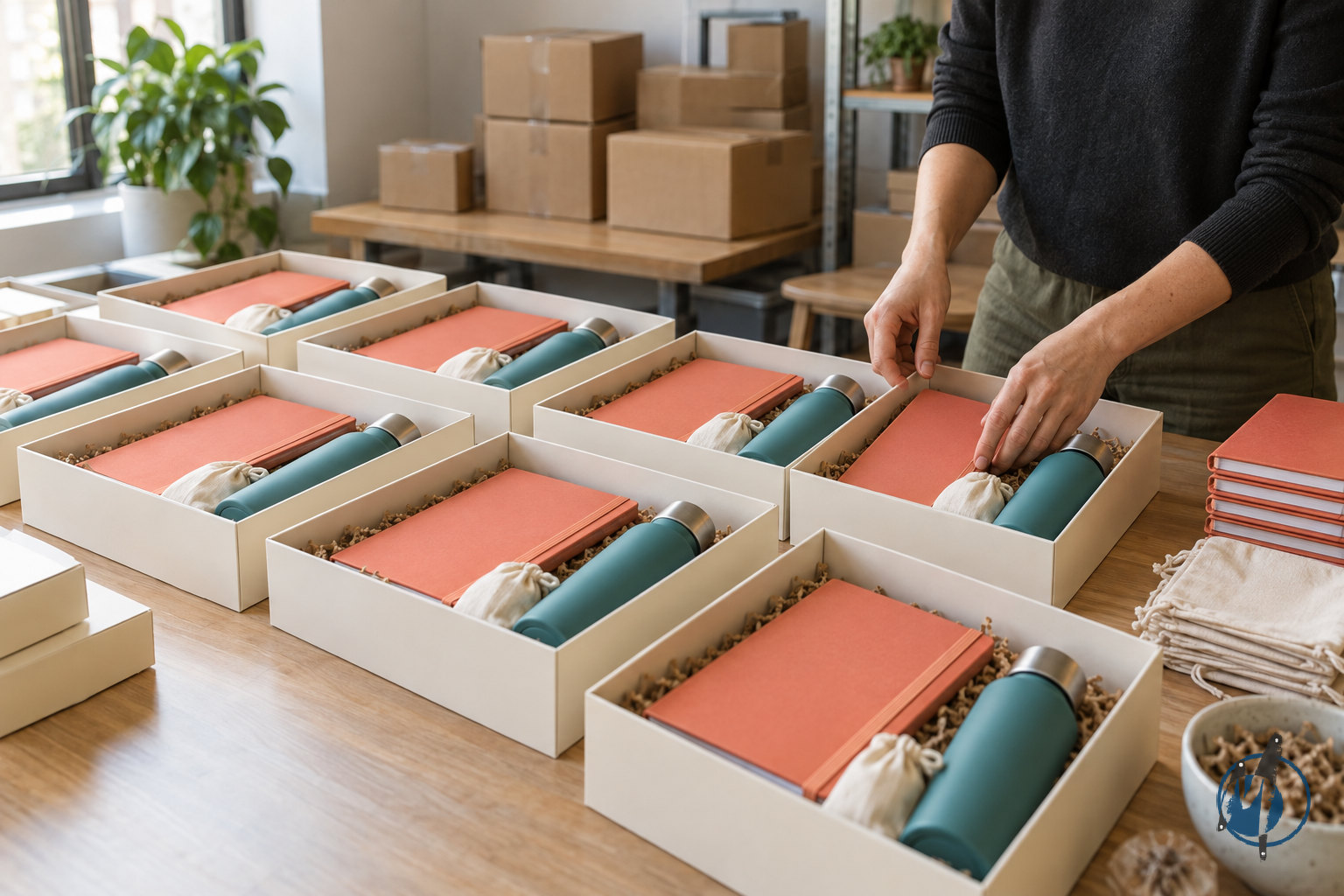
Messketeers is an India-based creative studio whose services span brand identity, custom print and packaging, OEM stationery manufacturing, experiential decor and paper art installations. Within Global OEM Stationery Manufacturing — Corporate Onboarding & Welcome Kits, the offering covers kit curation and design, branded merchandise, custom kit boxes, and Pan-India and global dispatch. This connects the visual welcome experience with the practical work of creating and delivering the kit.
For an onboarding brief, that means considering the products and their presentation together. Stationery should feel connected to the employer brand; merchandise should have a clear purpose; packaging should suit both the contents and the delivery model. The right starting point is not a predetermined box of items, but a conversation about your employees, specifications and operational requirements.
Share these details to start a useful discussion
Your company’s brand guidelines and intended welcome experience.
Employee groups and any role-specific kit requirements.
Required quantity and whether hiring is batch-based or ongoing.
Budget scope, including whether shipping and taxes are included.
Delivery locations and the required arrival milestone.
Desired stationery, merchandise, packaging and personalisation.
Internal approval requirements and relevant procurement documentation.
Ask Messketeers to help shape a scope around those inputs, then confirm sampling, production and dispatch arrangements before committing. A well-planned corporate onboarding kit is more than branded merchandise: it is a practical first impression supported by thoughtful design, clear specifications and coordinated delivery.
Frequently asked questions
How do I choose a corporate onboarding kit supplier?
Compare suppliers on product suitability, design capability, sample quality, packaging construction and dispatch coordination. Request an itemised quotation and clarify who owns production, inspection and delivery exceptions. Evaluate a fully packed sample where possible, and make sure replacement terms, approved specifications and reorder arrangements are documented before placing the order.
What should a corporate onboarding kit contain?
Include items that support the employee’s first working week, such as useful stationery, a welcome message and an appropriate everyday accessory. Adjust the selection for office, remote or field roles. Apparel, electronics and drinkware can work well, but introduce additional considerations around sizing, compatibility, material specifications, packing and after-sales support.
Can onboarding kits be delivered directly to employees?
Yes, direct-to-employee dispatch can be part of an onboarding kit programme. Confirm address serviceability, recipient data requirements, tracking arrangements and responsibility for failed deliveries before production. For international shipments, additionally establish product restrictions, customs documentation and who will pay applicable duties, taxes or clearance charges at the destination.
How far in advance should we order welcome kits?
Work backwards from the required arrival date using a supplier-confirmed milestone plan. Allow for curation, artwork approval, sampling, production, inspection, packing and transit. Custom stationery, bespoke boxes and international destinations may require additional planning. Ask for a schedule based on your final specifications rather than relying on a general turnaround estimate.
How can we control onboarding kit costs without reducing quality?
Prioritise useful essentials, remove unnecessary inclusions and match packaging dimensions closely to the contents. Compare total delivered costs rather than merchandise prices alone. Keep the core specification consistent for reorders and separate optional upgrades. Ask suppliers to identify trade-offs clearly so that savings do not quietly reduce durability or transit protection.
What onboarding kit services does Messketeers offer?
Under Global OEM Stationery Manufacturing — Corporate Onboarding & Welcome Kits, Messketeers offers kit curation and design, branded merchandise, custom kit boxes, and Pan-India and global dispatch. Share your employee audience, quantity, budget scope, brand guidelines and delivery destinations to discuss a suitable kit and confirm the project’s production and fulfilment requirements.