 Messketeers
Corporate Diary Printing with Logo: An Expert Guide
· 12 min read
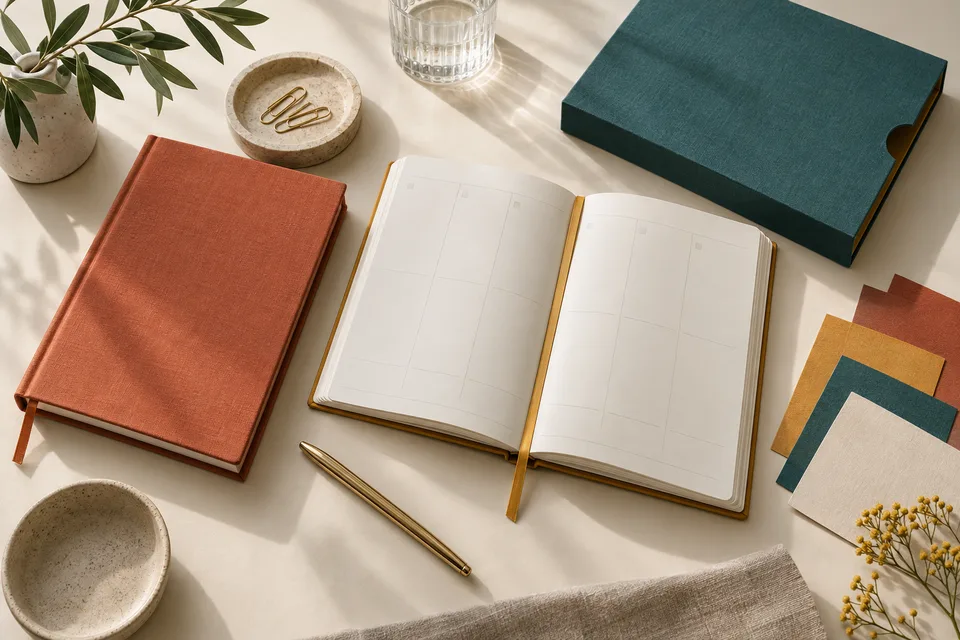
Quick answer: Corporate diary printing with logo turns a diary, planner or notebook into a branded product through customised covers, interior pages, bindings and packaging. The best specification starts with how people will use it, then matches the logo treatment, paper and production method to that purpose. For businesses in India, a clear brief and approved sample are more useful than choosing a cover finish from a catalogue alone.
What does corporate diary printing with logo include?
Corporate diary printing can mean anything from adding a logo to an existing notebook to manufacturing a fully customised planner. These are different purchasing routes, with different levels of control. A ready-made product may suit a straightforward gifting requirement, while custom manufacturing allows the cover, page layout, paper, binding and presentation to work together as one branded experience.
The logo is only one component. A diary can also communicate identity through colour, typography, material texture, page proportions and thoughtful functional details. For example, a company with a practical, engineering-led identity might prioritise durable construction and clear project-planning pages. A design-led business might favour tactile paper, restrained cover branding and a distinctive colour system.
The main areas you can customise
Cover: material, colour, artwork, surface texture and logo application.
Binding: construction, opening behaviour, spine appearance and durability.
Interior: dated or undated layouts, ruling, paper and custom introductory pages.
Accessories: ribbon markers, elastic closures, pen loops or pockets, subject to manufacturing feasibility.
Packaging: sleeves, wraps, boxes and coordinated printed inserts.
Private label: stationery designed and manufactured for sale or distribution under your own brand.
Before requesting a quotation, distinguish between essential requirements and optional enhancements. This keeps suppliers from estimating fundamentally different products and makes comparisons meaningful. It also prevents a familiar procurement problem: selecting the lowest headline price, then discovering that important production details were excluded.
Which diary format is right for your employees, clients or customers?
The right format depends on the recipient’s routine rather than the gifting occasion alone. Employees who organise meetings need something different from retail customers buying a reflective journal. Start by identifying the main task: scheduling, note-taking, project tracking, personal planning or a combination of these. Then decide how much structure will genuinely help.
Dated planners offer immediate calendar utility, but their usefulness is tied to the correct year and distribution timing. Undated planners give recipients flexibility and reduce the risk of leftover stock becoming calendar-obsolete. Ruled notebooks are simpler and versatile, although they provide less built-in planning support. None is universally better; the intended use should decide.
Format | Best suited to | Main advantage | Main consideration |
|---|---|---|---|
Dated diary | Calendar-led business use and annual gifting | Ready-to-use scheduling structure | Dates, holidays and delivery timing need careful checking |
Undated planner | Flexible planning and year-round distribution | Users can start whenever they choose | Layout must make the planning method clear |
Ruled notebook | Meetings, training and everyday notes | Broad usefulness across teams | Limited scheduling support without custom pages |
Dot-grid journal | Flexible layouts, sketching and planning | Supports different working styles | Not every recipient prefers an unstructured format |
Custom hybrid | Role-specific workflows or private-label ranges | Combines planning and notes around a defined purpose | Requires more layout development and proofing |
Questions to answer before choosing
Will the diary stay on a desk or travel in a bag?
Does the user need daily detail, weekly visibility or mostly blank space?
Will recipients receive it before the relevant calendar period begins?
Does one format suit everyone, or do different audiences need separate versions?
Are internal reference pages useful enough to justify their inclusion?
Size and page count should follow these decisions. A larger diary gives more writing room but adds bulk and shipping weight. A compact format travels well but can make busy weekly layouts feel cramped. Review a physical dummy wherever possible; dimensions on a specification sheet do not fully communicate everyday handling.
How should your logo appear on the diary cover?
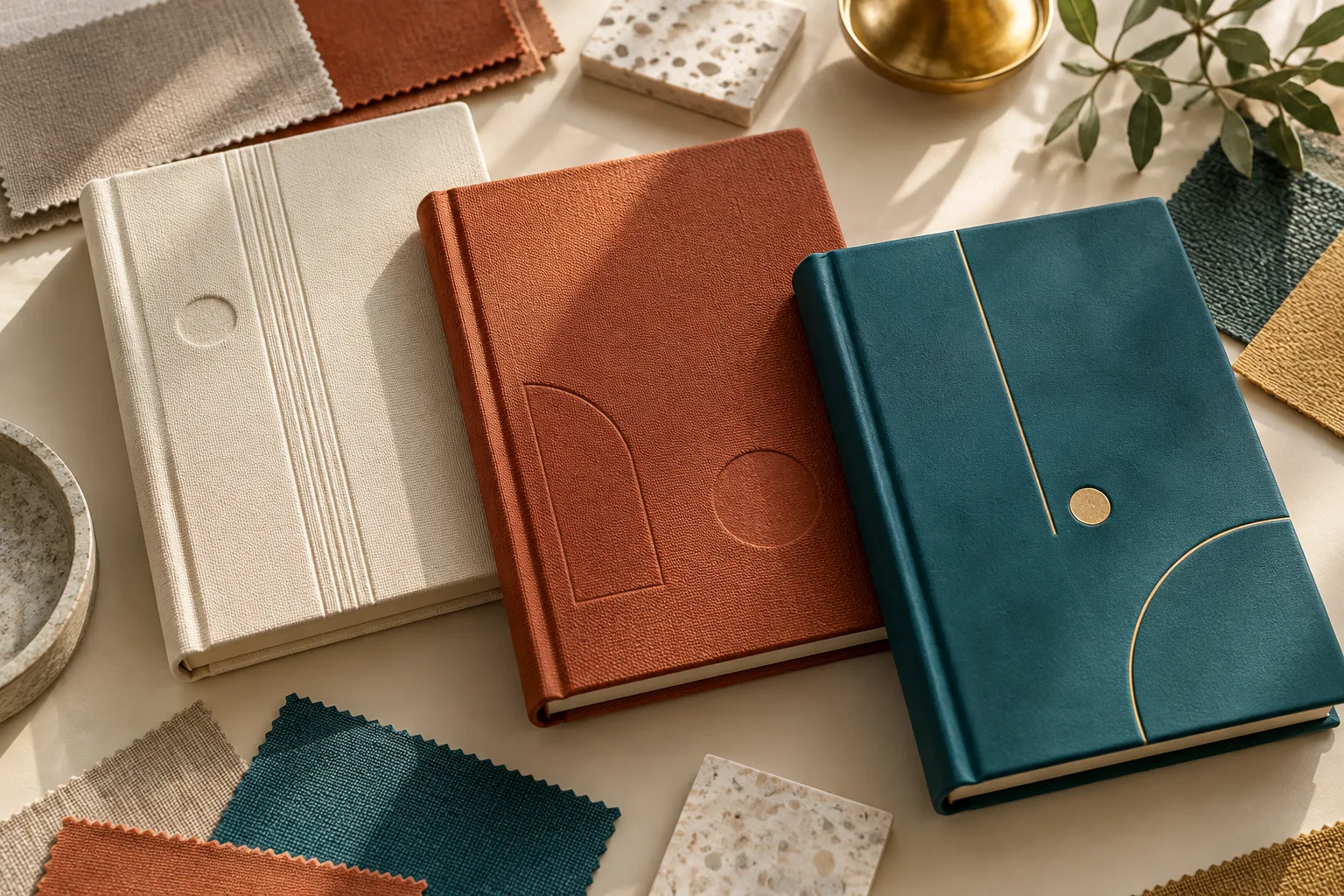
A successful cover treatment makes the brand recognisable without making the diary feel like disposable promotional merchandise. Logo size, placement and contrast should be considered alongside the cover material. An oversized mark may dominate a refined surface, while a delicate mark can disappear on a heavily textured material. Evaluate the actual combination, not each element separately.
Different decoration methods create different effects and have different artwork requirements. Very fine lines, small counters inside letters and tightly spaced elements can become difficult to reproduce cleanly. Ask for a feasibility review before finalising artwork, especially when adapting a detailed corporate logo to a small application area.
Logo treatment | Visual effect | Where it can work well | What to check |
|---|---|---|---|
Blind debossing | Recessed, tonal impression | Understated branding on suitable cover materials | Texture, impression depth and fine-detail clarity |
Foil stamping | Metallic or pigmented surface accent | A defined focal point on compatible covers | Foil adhesion, line thickness and placement |
Screen printing | Flat, graphic colour application | Simple marks and selected colour treatments | Surface compatibility, opacity and registration |
Digital or offset printed wrap | Full-colour cover artwork | Illustrations, patterns and broader brand storytelling | Colour reproduction, finishing and fold positions |
Embossing | Raised dimensional detail | Selected cover constructions | Material response and construction feasibility |
Make the artwork production-ready
Provide a vector logo where available, along with brand colour references and a clear placement drawing. Include any required clear space and identify whether the mark must appear in a specific colour or can use a tonal treatment. A screen preview is not a reliable guarantee of colour on fabric, paper, coated stock or synthetic cover material.
A useful principle is to separate recognition from repetition. The cover can carry a restrained mark, while a welcome page or packaging insert provides fuller brand messaging. Repeating a large logo on every writing page can reduce usability and distract from the diary’s primary purpose. A carefully placed footer or subtle recurring design element is often more considered.
Which paper, ruling and binding choices affect everyday quality?
Paper should be selected for writing performance, not weight alone. GSM describes grammage, but it does not independently establish opacity, smoothness, ink absorption or resistance to feathering. The same pen can behave differently on papers of similar weight because their composition and surface treatment differ. Test the actual proposed stock using the writing instruments your audience is likely to use.
Ruling also changes the experience. Closely spaced lines increase apparent capacity but may feel restrictive for larger handwriting. Dark grid lines can overwhelm notes, while excessively pale ruling may be difficult to see. For custom planners, margins, writing zones and the gutter need to be reviewed together so that useful space is not lost near the binding.
Match the construction to the job
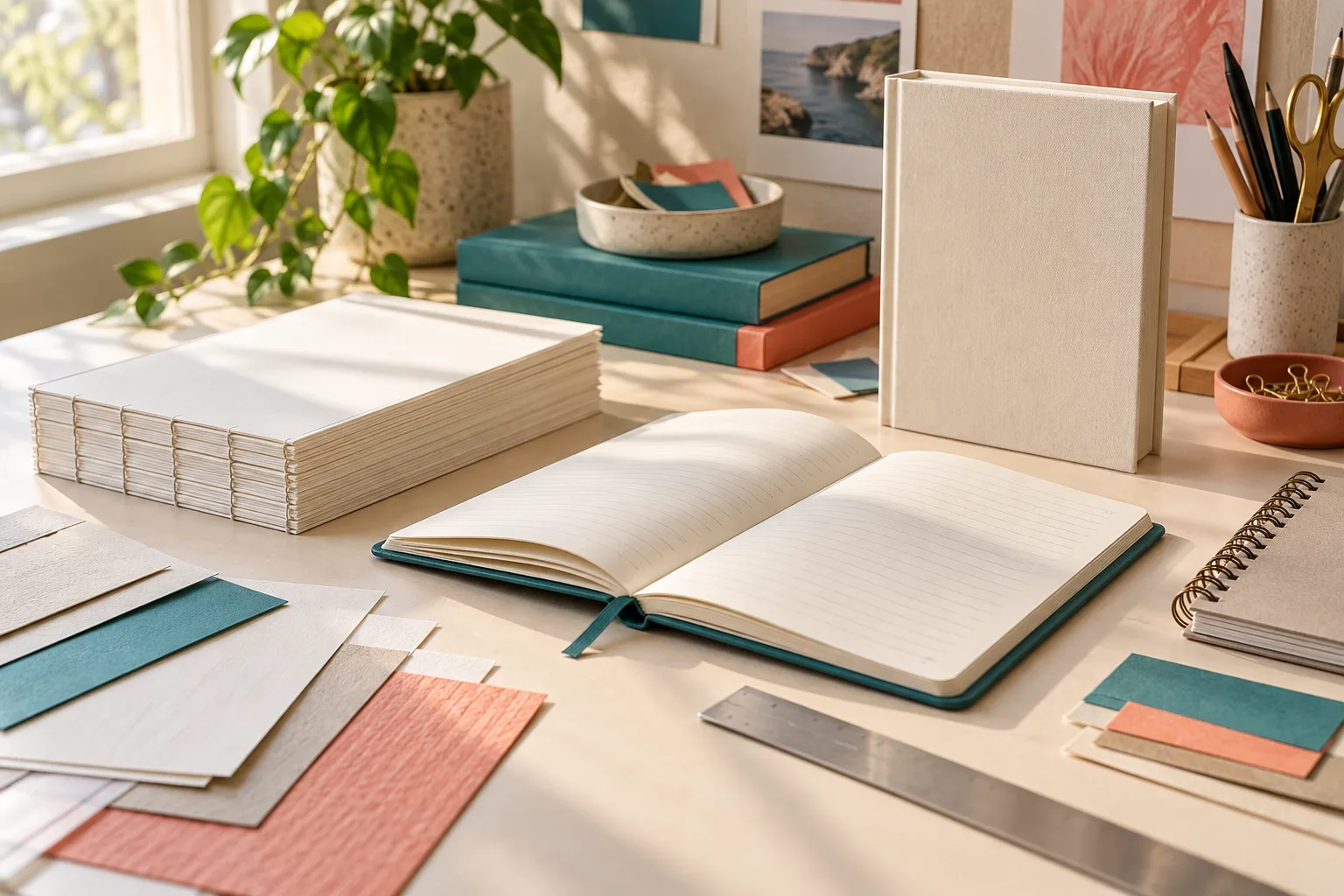
Section-sewn book blocks: can support durability and comfortable opening when the overall construction is designed well.
Adhesive-bound constructions: vary in performance according to adhesive, paper, thickness and manufacturing method.
Wire or spiral binding: can allow pages to turn back on themselves, with a visibly functional appearance.
Hard covers: provide structure and protection but add weight and bulk.
Flexible covers: can suit portable products, depending on the material and reinforcement.
Cover structure and binding method are related but separate specifications. Calling a diary “hardbound” does not fully explain how its pages are assembled. Likewise, a claim of “lay-flat” should be assessed on a sample rather than inferred from a product label. Check how comfortably the diary opens near the front, middle and back, without forcing the spine.
For dated interiors, quality includes information accuracy. Verify weekday alignment, month lengths, leap-year treatment and any included holidays against the intended audience and calendar year. Public holidays vary by jurisdiction, and a national gifting programme may need a different approach from a state-specific planner. Avoid adding reference information that cannot be reliably maintained.
What determines the cost, quantity and production schedule?
A meaningful estimate depends on a defined specification. Quantity matters, but so do page count, finished size, paper, cover construction, decoration, binding and packaging. Two diaries with similar-looking covers can have very different manufacturing requirements. Ask for the specification behind the quote rather than comparing a photograph and a unit price.
Some production activities involve setup work that is spread across the order. Custom artwork preparation, tooling, print setup and sample development can therefore influence small and large orders differently. Minimum order quantities also depend on the chosen construction and available materials. There is no single minimum that responsibly applies to every corporate diary project.
Ask for these quotation details
Product specification, including finished size, page count and paper.
Whether page count includes introductory or branded pages.
Cover material and exact logo application method.
Binding construction and included accessories.
Sampling, tooling and artwork-related charges, where applicable.
Packaging configuration and delivery destinations.
Applicable taxes, freight assumptions and payment terms.
Quantity tolerances, acceptance criteria and handling of defects.
Timing should be planned backwards from the date recipients need the diaries, not merely the event date or purchase-order date. Allow separately for design, content approval, material confirmation, sampling, manufacturing, inspection and transport. Late changes to a dated planner can affect several stages at once, especially if they alter pagination or require another physical sample.
For India-based procurement, confirm invoicing requirements, applicable GST treatment and delivery responsibilities with the supplier. For export orders, clarify destination-specific labelling, documentation and shipping terms. If diaries are needed across multiple offices, include address preparation and dispatch coordination in the plan rather than treating them as a last-minute administrative task.
What is the step-by-step process from brief to delivery?
A controlled process reduces avoidable revisions and makes approval responsibilities clear. It should connect the commercial brief to a technical specification, then connect that specification to artwork and a representative sample. Without that chain, teams can approve an attractive mock-up while leaving critical manufacturing decisions unresolved.
A practical production workflow
Define the purpose and audience. Record who will use the diary, how it will be distributed and what business purpose it serves.
Build the specification. Choose format, size, page count, paper, ruling, cover, binding, branding and packaging.
Confirm feasibility and estimate. Review materials, decoration compatibility, quantity requirements and schedule before refining every design detail.
Develop artwork and layouts. Prepare the cover, spine, interiors and packaging using the agreed production templates.
Proof the content. Check dates, spelling, page order, brand assets and writing areas. Assign an accountable final approver.
Review the appropriate sample. Assess construction and finish, noting which elements are representative and which may differ from final production.
Approve and freeze the specification. Record the approved artwork version, material references and any agreed limitations in writing.
Manufacture and inspect. Check the agreed product attributes against the approved specification and sample.
Pack and dispatch. Confirm protective packing, carton identification and delivery arrangements before shipment.
Know what each proof can establish
A digital proof is useful for checking content, layout and placement. It cannot establish paper feel, opening behaviour or physical decoration quality. A blank dummy can communicate size and bulk but may not represent the finished printing. A decorated sample answers different questions again. Ask explicitly what the sample demonstrates so that approval is based on the right evidence.
Keep feedback consolidated. If marketing, procurement and leadership send separate instructions, artwork can drift away from the agreed specification. One change log and one approval owner make it easier to trace decisions. Changes after approval should be assessed for their effect on cost, materials and delivery before production continues.
What should you check before approving a corporate diary order?
Approval should cover the diary as an object people will handle, not simply as a branded visual. Open it repeatedly, write on both sides of a page and examine the corners, spine and cover edges. Test accessories in normal use. A pen loop that looks neat but does not fit the intended pen is a design problem, not a minor cosmetic detail.
For larger or more complex projects, agree on inspection criteria before manufacturing. Identify which issues are unacceptable, which are cosmetic variations and how discrepancies will be addressed. Handmade-looking textures and natural materials may show variation, but acceptable variation should be discussed rather than assumed. Any formal sampling or testing requirement needs to be agreed for the order.
Pre-production approval checklist
Correct logo version, orientation, size and placement.
Approved material, colour reference and decoration method.
Confirmed dimensions, pagination and interior sequence.
Verified dates, holidays and reference information where included.
Legible ruling with comfortable writing margins.
Acceptable writing performance on the specified paper.
Suitable opening behaviour and secure page attachment.
Functional closures, ribbons, pockets or other accessories.
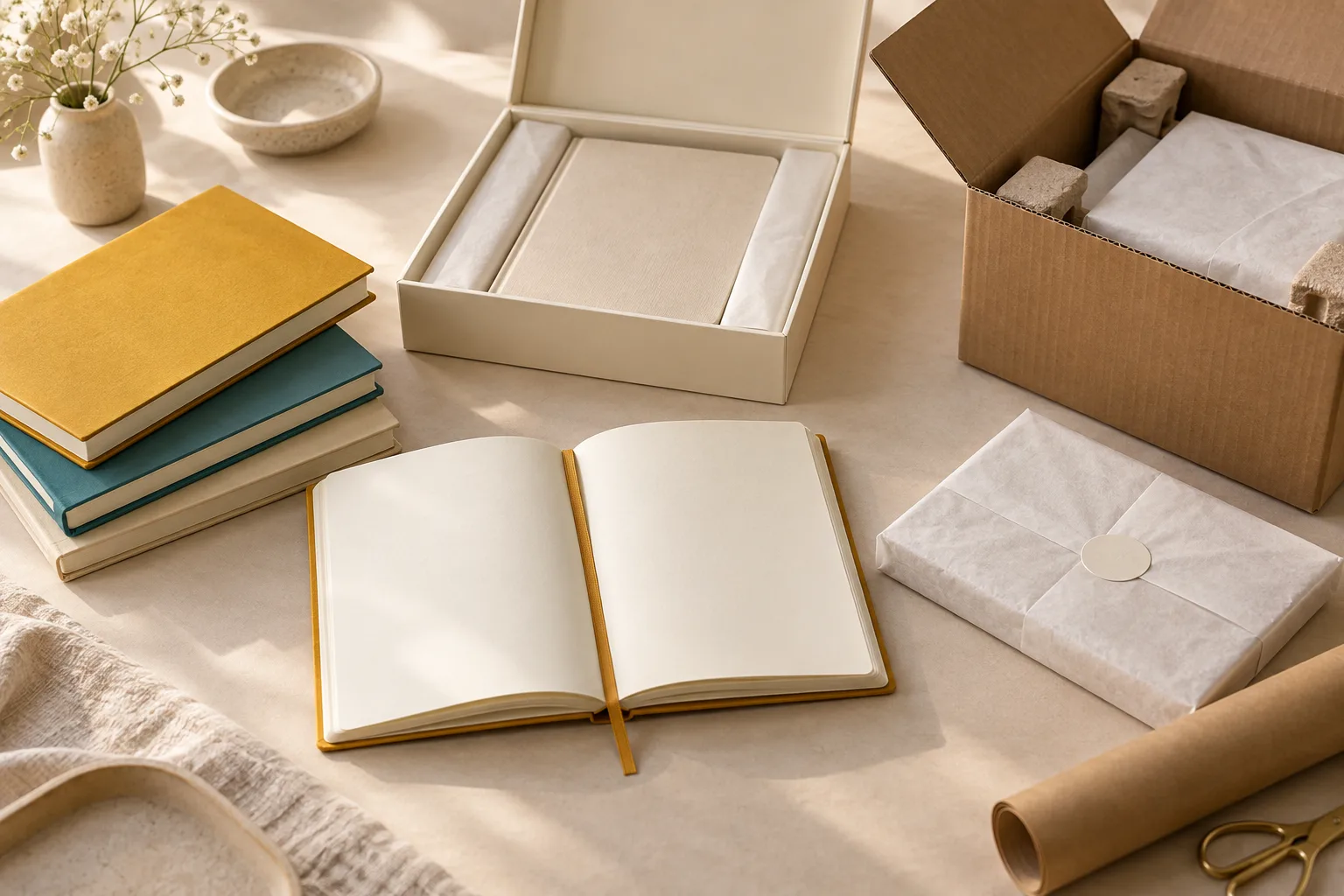
Packaging that fits without rubbing or distorting the diary.
Confirmed quantities, delivery details and approval records.
If the project includes sustainability requirements, translate them into verifiable specifications. “Eco-friendly” is too broad to guide manufacturing or support a public claim. Request evidence for recycled content, certified paper or other specified attributes where relevant, and confirm whether any associated claim or label is permitted for the finished product. Also consider durability, unnecessary packaging and material combinations that complicate disposal.
Which common mistakes should you avoid with branded diaries?
The most common mistake is treating the logo as the entire product brief. A well-reproduced mark cannot compensate for awkward opening, cramped pages or a format the recipient does not need. Another is choosing multiple decorative effects without a clear design hierarchy. More finishes can mean more complexity without making the diary more desirable or useful.
Dated diaries create a particular inventory risk. Ordering without a realistic distribution plan can leave stock that loses usefulness as the year progresses. Undated products reduce that calendar dependency, but they still require sensible quantities and a relevant design. An evergreen format is not a substitute for understanding the audience.
Avoid these procurement and design traps
Comparing non-equivalent quotes: align paper, construction, decoration and packaging before comparing totals.
Approving colour only on screen: review appropriate physical references or samples for the selected process.
Using low-resolution logo files: supply suitable source artwork and resolve detail limitations early.
Overbranding the interior: protect writing space and keep recurring elements unobtrusive.
Adding excessive reference content: include only information that is useful, accurate and maintainable.
Assuming accessories are standard: specify them and test their placement and function.
Ignoring transit protection: a premium finish still needs packaging suited to its delivery route.
Changing specifications informally: document revisions and reconfirm their production implications.
Private-label projects need additional clarity around repeat orders. Agree on ownership and permitted use of supplied artwork, treatment of tooling, material substitution approvals and reference samples for future production. If consistency across batches is important, record measurable specifications and retain an approved physical reference. Product photographs alone are insufficient to reproduce a tactile stationery range reliably.
How Messketeers can help: what should you share first?
Messketeers is an India-based creative studio whose Global OEM Stationery Manufacturing — Journals, Planners & Notebooks offering brings together custom covers and bindings, dated and undated planners, paper and ruling options, and private-label development. For corporate diary printing with logo, these capabilities support a more complete brief than cover branding alone: the product can be considered from its writing experience through to its presentation.
The studio’s wider work in brand identity and custom print and packaging is relevant when a diary needs to belong to a larger brand system. A staff welcome kit, client gifting programme or private-label stationery collection benefits from consistent colour, materials and design language. Experiential decor and paper art installations can also provide context when stationery is part of a broader branded event, without replacing the practical requirements of the diary itself.
Send a brief that makes the next conversation productive
Your intended users and the purpose of the diary.
Whether you need a dated planner, undated planner, journal or notebook.
Required quantity and any separate versions or personalisation needs.
Preferred dimensions, paper, ruling and binding, if already decided.
Logo files, brand guidelines and visual references.
Packaging requirements and delivery locations.
Your required in-hand date and budget parameters.
If you are unsure about materials or construction, start with the user experience you want rather than guessing technical specifications. Ask Messketeers to review the brief against feasible options and clarify the proposed sampling and approval route. The goal is a diary that represents your brand well because it is thoughtfully designed, accurately produced and genuinely useful long after it is handed over.
Frequently asked questions
What is the minimum order quantity for corporate diaries with a logo?
Minimum order quantity depends on whether you are branding an existing diary or manufacturing a custom product. Cover materials, binding, interior printing and packaging can each affect feasibility. Share your required quantity and specification with Messketeers so the proposed manufacturing route and any minimum requirements can be confirmed for your project.
Which logo printing method is best for a corporate diary?
The best method depends on the cover material, artwork and desired effect. Blind debossing offers understated texture, foil stamping creates a defined accent, and printed covers allow full-colour graphics. Review compatibility and fine-detail reproduction before deciding. A sample on the proposed material is more informative than a digital mock-up alone.
Can I customise the inside pages as well as the cover?
Custom manufacturing can include branded introductory pages, bespoke planning layouts, ruling and selected reference content alongside cover branding. Messketeers offers dated and undated planners plus paper and ruling options. Confirm the proposed pagination and proofing process, especially for calendars, where date accuracy and page sequence need careful approval.
Should I choose a dated or undated corporate planner?
Choose a dated planner when recipients need calendar-based scheduling and distribution can happen before the relevant period begins. Choose an undated planner for flexible start dates or year-round gifting. Undated formats reduce calendar obsolescence, while dated formats offer immediate scheduling convenience. The recipient’s working habits should guide the decision.
How long does custom corporate diary production take?
A reliable schedule requires a confirmed specification, quantity, material availability and approval process. Plan for artwork, proofing, sampling, manufacturing, inspection and transport rather than production alone. Share your required in-hand date at the briefing stage, and ask for a project-specific schedule that identifies approval deadlines and dependencies.
Can Messketeers manufacture private-label diaries and notebooks?
Messketeers offers private-label development within its Global OEM Stationery Manufacturing service for journals, planners and notebooks. The brief can cover custom covers, bindings, dated or undated interiors, paper and ruling. Discuss brand assets, packaging, repeat-order expectations and approval requirements to define the product and confirm manufacturing feasibility.